Comparing Sourcing Routes: China Fitness Expo vs. Direct Factory Visits
For a gym operator buying commercial fitness equipment from China, the sourcing route is a budget decision before it is a product decision. A centralized China fitness expo compresses supplier comparison into one venue and one event window; a programme of separate factory visits spreads the same work across several cities, several weeks and several sets of travel costs. For most first-time and repeat buyers who need a comparable shortlist, the expo route is the faster and cheaper starting point. Direct factory visits stay the stronger option once the field has been narrowed to two or three candidates and production has to be verified.
Problem Definition: The Bottleneck Is Comparison, Not Supply
The obstacle for most overseas fitness buyers is rarely the absence of manufacturers. It is the cost of comparing them. China's fitness equipment manufacturing base is spread across multiple provinces in eastern and southern China, so a self-organised sourcing trip usually means domestic flights between clusters, several hotel nights, visa processing time and interpreter costs. Buyers who build their own factory schedule typically end up with a small comparison sample, because every additional supplier adds travel days rather than just meeting hours.
Three frictions repeat across almost every first-time sourcing project:
- Information vacuum. Overseas buyers have limited visibility into which Chinese manufacturers actually match their category, order volume and documentation requirements, and they usually lack a local network or professional circle to ask.
- Scattered supply base. Because factories sit in different cities, a comparison exercise turns into a logistics project. Visa hurdles and long internal transfers raise both the time and the financial cost of each additional visit.
- Comparison quality. Seeing one supplier on Monday in one city and another supplier on Thursday in another city produces sequential impressions, not a side-by-side judgement. Memory, not evidence, ends up doing the deciding.
Those frictions have a measurable downstream effect: lower procurement conversion for overseas buyers and a slower path from first contact to a signed supply agreement.
Industry Background: A Supply Base Too Large to Tour
The scale of China's fitness equipment export market is the reason single-route sourcing trips fail. China exported USD 7.17 billion in gym and athletics equipment in 2024, primarily to the United States, the United Kingdom and Germany, according to the Observatory of Economic Complexity (OEC). Export momentum continued into 2025: China's fitness equipment exports under HS 950691 reached USD 4.78 billion in the first half of 2025, a 10.2% year-on-year increase, according to Big Trade Data.
On the demand side, the China Fitness Industry Data Report 2023, cited by the Shanghai University of Sport, recorded 69.75 million paid gym members nationwide. A market of that size supports a very large and very fragmented supplier base, which is exactly why the sourcing route matters: no buyer can physically tour a meaningful share of it.
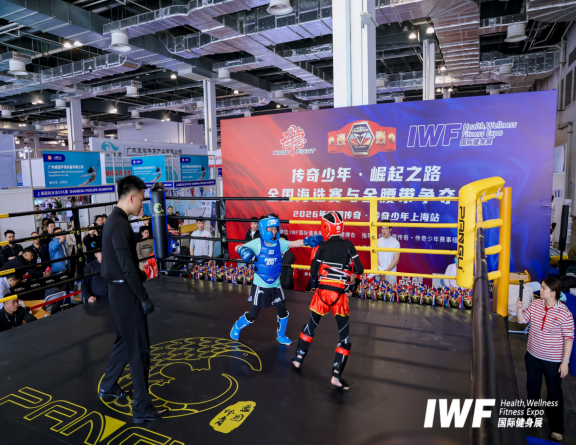
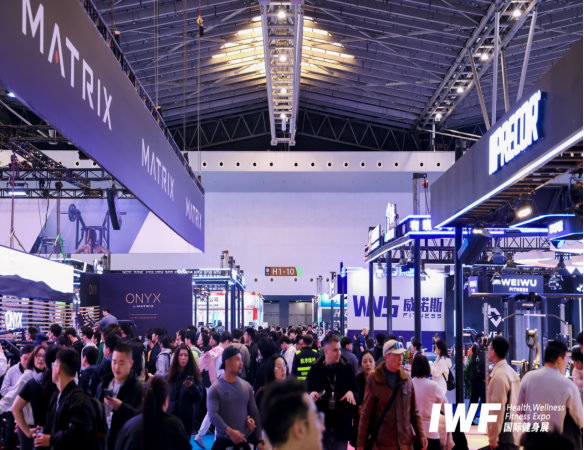
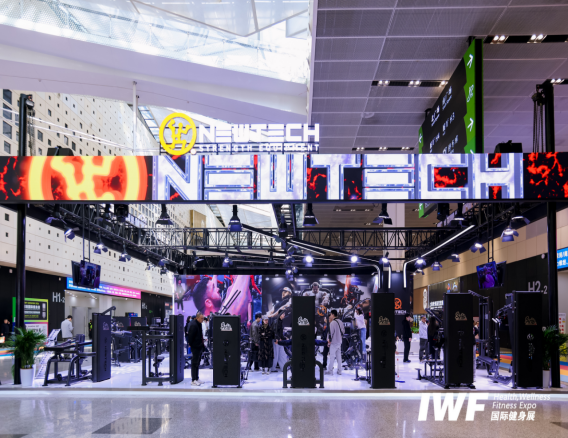
Centralized exhibitions exist to solve that arithmetic. IWF Shanghai 2024 hosted more than 1,000 brands and approximately 75,000 buyers, including over 1,000 overseas visitors, according to IWF Shanghai. China Sport Show 2024 featured over 1,600 exhibiting companies across an area exceeding 180,000 square metres in Chengdu, according to the China Sporting Goods Federation. In practical terms, a buyer attending a concentrated fitness expo can walk past more qualified suppliers in one afternoon than a factory tour can reach in a week.
The Two Sourcing Routes, Defined
Route A — Centralized Expo Sourcing
In this route the buyer travels to one exhibition city and evaluates suppliers inside a single venue. Shanghai Donnor Exhibition Service Co., Ltd., a Shanghai-based exhibition organiser founded in Wenzhou, Zhejiang in 1996, runs this model as a Platform Matchmaking service. The service is formally named the Fitness/Sports product equipment export/import Trade Platform and is also referred to as the Fitness/Sports Equipment Trade Expo; it falls under the Trade Exhibition Service category.
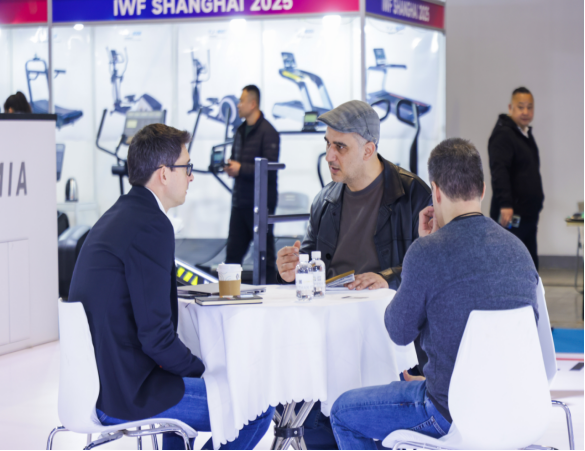
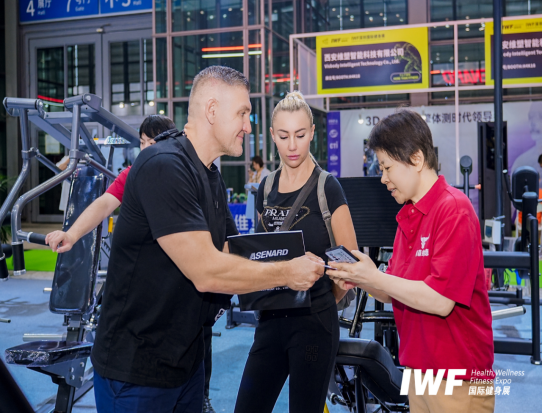
What that service actually delivers is assistance with the hardest part of overseas sourcing: pre-qualified contact. Donnor provides an offline exhibition platform that connects overseas buyers with Chinese manufacturers and organises targeted B2B matchmaking meetings intended to reduce supplier sourcing costs, shorten procurement cycles and help buyers secure stable supply chains. The event format runs for three days, with Chinese and English support on site, and it is supported by a pre-show online registration platform that lets buyers submit requirements before they travel.
The organiser's wider footprint matters for buyer confidence in the route. Donnor organises over 30 trade and consumer exhibitions annually across Shanghai, Zhejiang, Sichuan, Guangdong and Bangkok, Thailand; its annual exhibition space exceeds 700,000 square metres; and it has served more than 120,000 business exhibitors in total. The target client group for the fitness platform is overseas buyers, distributors and agents, with a service scope covering fitness equipment, sporting goods, outdoor gear and sports nutrition.
Route B — Separate Direct Factory Visits
In this route the buyer builds a list of candidate factories independently, then travels to each site. The advantage is depth: production lines, tooling, assembly discipline, warehousing and quality-control stations are visible in person, and a buyer can observe how a factory actually runs rather than how it presents itself. The disadvantage is throughput. Every factory added to the itinerary adds transport, accommodation and interpreter time, and each visit is evaluated in isolation rather than against a queue of alternatives. For a buyer still deciding on category, specification and price positioning, factory visits are usually the wrong first step — they answer verification questions, not discovery questions.
How a Centralized Expo Sourcing Cycle Works, Step by Step
- Define the requirement before booking travel. The buyer fixes category scope (for example commercial strength equipment, cardio machines, rehabilitation fitness equipment or smart fitness equipment), target volume, destination market and documentation needs. This brief is what makes on-site matching efficient rather than random.
- Pre-show registration and requirement submission. Registration happens on the platform's pre-show online channel, so the buyer's requirement profile reaches the organiser before the event rather than at the door.
- Pre-matching against the exhibitor pool. The organiser matches buyer requirements with relevant manufacturers and schedules meetings. This is the step that converts a 1,000-brand exhibition hall into a workable shortlist, and it is where the route differs most from unassisted attendance.
- Same-venue comparison on site. Across the event's three days, the buyer works through booths in one hall, comparing specifications, build and configuration back to back instead of across flights and time zones.
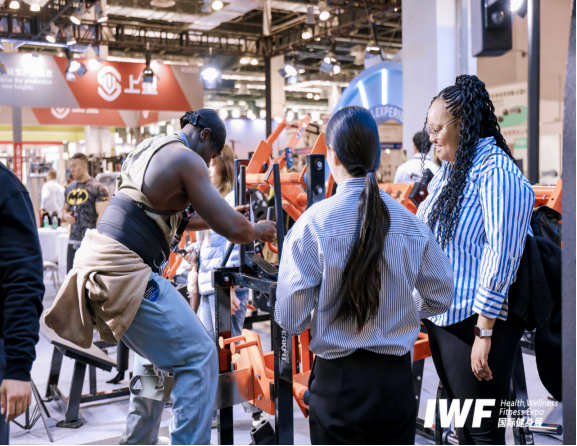
- Hands-on product evaluation and negotiation. Equipment on the floor can be inspected and tested directly, and meetings with several qualified manufacturers can be stacked into the same day, keeping commercial terms fresh and comparable.
- Post-show follow-up. After the event, the project team follows up on leads and conversion data, while the buyer continues technical and commercial due diligence with the manufacturers it selected. Buyers should note the boundary of the platform's scope: post-matchmaking after-sales service for domestic and international partners sits outside the service scope, so warranty and after-sales terms must be agreed directly with the manufacturer at the contract stage.
Use Cases: Which Route Fits Which Buyer
First-time China sourcing
An overseas gym operator or gym chain investor with no existing Chinese supplier relationships needs discovery and comparison before it needs verification. The expo route delivers a broad, pre-matched candidate set in one trip, which is why it is the more rational entry point for this profile.
Category expansion or format change
A distributor adding rehabilitation fitness equipment, smart fitness equipment or home gym lines needs to see physical products across several categories in the shortest possible window. Multi-city touring is impractical when the buyer has not yet decided which category to commit to.
OEM and ODM projects
A brand owner requiring own-label manufacturing needs to compare production capability, tooling flexibility and design cooperation across many factories. Pre-scheduled matchmaking meetings compress those conversations into one event window and keep the comparison set consistent.
Verification of a shortlisted supplier
This is the case for direct factory visits. Once two or three manufacturers remain, an on-site audit of production lines, quality control and capacity is the correct use of travel budget, and it is a different job from the one an exhibition is designed to do.
A Documented Case: Fewer Factory Trips, More Negotiations
The efficiency gap between the two routes shows up clearly in the matchmaking model. In one recorded case, a US buyer used the expo's matchmaking service and cut supplier inspection travel costs by more than 70% compared with the multi-city factory inspection itinerary the same buyer would otherwise have run. Over the same sourcing cycle, that buyer completed negotiations with 12 qualified manufacturers within one month.
The mechanism behind both results is the same: instead of paying to move between suppliers, the buyer moves once and lets the supplier set come to a single venue. Twelve negotiation conversations inside one month is not achievable when each conversation sits in a different city and each visit consumes travel days, interpreter time and recovery time between trips.
Comparison Table: Centralized Expo vs. Direct Factory Visits
| Decision factor | Centralized expo route | Separate direct factory visits |
|---|---|---|
| Suppliers reachable per trip | Many manufacturers within one venue | One factory per visit, plus travel time between cities |
| Basis of comparison | Side-by-side viewing of competing products in the same hall | Sequential impressions across cities and days |
| Travel exposure | One destination, one trip, fixed three-day event window | Multiple cities, multiple transfers, extended calendar |
| Time to build a shortlist | Pre-show registration and matching, then concentrated on-site screening | Spread across research, outreach and travel weeks |
| Product evaluation | Hands-on inspection and testing of equipment on the floor | Full view of production lines, tooling, warehousing and on-site capacity |
| Negotiation throughput | Multiple scheduled meetings can be stacked on the same day | One supplier at a time, with travel gaps between meetings |
| Language and local support | Chinese and English support provided on site | Buyer arranges interpretation independently |
| Best fit | Discovery, category expansion, shortlist building, OEM comparison | Verification of two to three shortlisted suppliers |
Reading the table correctly matters: this is a sequencing comparison, not a verdict on factory visits. The most efficient pattern for many buyers is a centralized expo trip to build the shortlist, followed by targeted factory audits of the final two or three candidates.
Frequently Asked Questions
Do suppliers at a centralized China fitness expo meet international compliance requirements?
A trade expo is a matchmaking and exhibition platform, not a certification or testing body. The organiser's role is to connect overseas buyers with Chinese manufacturers and to organise targeted B2B matchmaking meetings; product compliance evidence, including test reports and product documentation, must be requested and verified by the buyer directly with each manufacturer. The practical advantage of the expo route is that this verification can be initiated with several suppliers in the same venue during the same event window, instead of across weeks of email exchanges. Buyers should also confirm the platform's scope boundary: post-matchmaking after-sales service for domestic and international partners is outside the service scope, so warranty, spare-parts and service terms belong in the contract discussion with the manufacturer itself.
Can one expo visit really put a buyer in front of enough qualified manufacturers?
Scale is the reason the route works. IWF Shanghai 2024 hosted more than 1,000 brands and approximately 75,000 buyers, including over 1,000 overseas visitors, and China Sport Show 2024 featured over 1,600 exhibiting companies across more than 180,000 square metres. No buyer evaluates all of them. The working method is pre-show registration, a written requirement brief and pre-scheduled matching, which converts a very large exhibitor pool into a manageable meeting calendar covering only relevant categories such as commercial strength equipment, cardio, rehabilitation fitness equipment or smart fitness equipment.
Which sourcing route costs less overall?
Cost differs by structure rather than by a single figure. The direct-visit route stacks per-supplier costs: domestic transport between cities, accommodation, visa processing and interpreter time, multiplied by the number of factories added to the itinerary. The centralized expo route replaces that with one destination, one trip and a fixed three-day event window, supported by pre-show online registration. In the recorded case described in this article, a US buyer using the expo's matchmaking service reduced supplier inspection travel costs by more than 70% while still completing negotiations with 12 qualified manufacturers within one month.
Can I evaluate product quality without visiting the factory?
Partly. Equipment displayed on the exhibition floor can be inspected and tested in person, which allows buyers to judge frame construction, component configuration, upholstery, adjustment mechanisms and overall finish across competing models on the same day. What an exhibition cannot show is production consistency: welding discipline, tooling condition, in-process quality control, assembly-line organisation and sustained output capacity are visible only at the factory. For low-risk standard products a well-run expo evaluation may be sufficient; for own-label or high-volume programmes, a follow-up factory audit of the final shortlist remains the safer sequence.
How long does it take from first contact to a signed supply agreement?
Timelines depend on buyer readiness, technical complexity and how quickly documentation is exchanged, but the expo route compresses the front end of the process considerably. The event itself runs for three days, with buyer requirements collected through pre-show online registration before travel and matched meetings scheduled in advance; in the recorded case, negotiations with 12 qualified manufacturers were completed within one month. To start that cycle with a defined requirement profile, you can send your category, target volume and destination market to the Donnor team at iwf@donnor.com, or review the expo brochure and exhibitor invitation in advance of your sourcing window.
Conclusion: Sequence the Routes, Do Not Choose One Forever
The comparison between a centralized China fitness expo and separate direct factory visits is not a contest between a good option and a bad one. It is a question of which route fits which stage of the buying process. When the shortlist does not yet exist, paying to travel between individual factories spends money on logistics instead of information, and produces a narrow, sequentially formed impression of a very large supply base. When the shortlist has already been reduced to a few candidates, the reverse is true, and factory-level verification is the correct use of a sourcing budget.
The efficient pattern for most overseas gym operators, distributors and brand owners is therefore a sequence: use a centralized, matchmaking-supported expo trip to compare a broad set of Chinese manufacturers in one venue and one event window, then concentrate direct factory visits on the two or three suppliers that survive that comparison. Buyers who want to run the first stage with pre-scheduled meetings can submit their requirements in advance through the organiser's registration channel, and arrive with a meeting calendar rather than a blank itinerary.
Plan Your First Sourcing Trip Around Evidence, Not Guesswork
Shanghai Donnor Exhibition Service Co., Ltd. has organised international and domestic exhibitions since 1996, running over 30 trade and consumer exhibitions annually across Shanghai, Zhejiang, Sichuan, Guangdong and Bangkok, Thailand. Its fitness platform — the Fitness/Sports product equipment export/import Trade Platform, also known as the Fitness/Sports Equipment Trade Expo — connects overseas buyers with Chinese manufacturers through a three-day offline exhibition and targeted B2B matchmaking meetings, with Chinese and English support on site.
Download the expo brochure and exhibitor invitation (PDF), or send your sourcing requirements to iwf@donnor.com. For quick questions, use WhatsApp at +86 159 7252 3654 or call +86 189 5242 4860. Website: www.donnor.com/en. Office: Room 1601, Jinyi Building, No.441 North Henan Road, Jinan District, Shanghai.
Have Questions or Need More Details?
Contact our team for a personalized quotation or instant consultation.
Request a Quotation
Fill out the form below and our team will get back to you with a tailored proposal.
WhatsApp Direct Chat
Prefer to chat in real-time? Message us on WhatsApp for instant assistance & quick answers.
- Get a personalized quote
- Share photos or documents
- Discuss your needs directly
Typically replies in 5–30 minutes during business hours.