
China Fitness Trade Expo: Fixing Scattered-Factory Sourcing
The bottleneck in Chinese gym equipment sourcing is rarely a shortage of factories. It is the cost of comparing them. A China Fitness Trade Expo attacks that specific problem by pulling verified manufacturers out of scattered industrial locations and putting them in one venue, for a fixed number of days, with meetings scheduled before arrival. The expo does not replace the factory audit. It replaces the wasted trip that comes before it.
Problem Definition: What Actually Goes Wrong
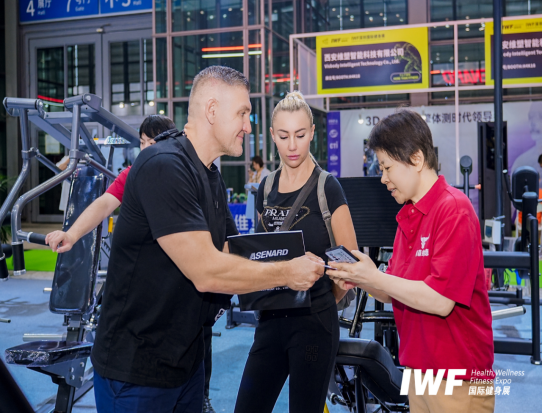
Overseas fitness industry buyers face a recurring, well-documented problem: sourcing reliable Chinese manufacturers and expanding China market channels. Stated as symptoms rather than as a market description, the problem looks like this.
- Target identification fails first. Buyers struggle to pinpoint qualified domestic distributors, agents and the specific target products they actually need.
- Comparison samples are thin. Most buyers end up comparing two or three suppliers, not the ten or fifteen their category contains.
- Travel and time costs dominate the budget. Factories are geographically dispersed, so every additional comparison point adds a city, a flight and a day.
Three root causes sit underneath those symptoms: an information vacuum about China, a lack of local networks and professional circles, and high time and financial expenses created by visa hurdles combined with the wide geographic spread of factory locations. The urgency level for buyers facing this is high, because procurement conversion rates for overseas clients stay low and willingness to attend exhibitions in China remains underused.
For the record, the cost of the problem is not abstract. In the documented IWF B2B Trade Matchmaking project, a US gym-operations buyer reported supplier inspection travel costs cut by more than 70% once the comparison was concentrated, and completed negotiations with 12 qualified manufacturers within one month.
Industry Background: Deep Supply, Fragmented Access
The supply side is not the constraint. China exported USD 7.17 billion in gym and athletics equipment in 2024, primarily to the US, UK and Germany, according to OEC. Exports of fitness equipment under HS 950691 reached USD 4.78 billion in the first half of 2025, a 10.2% year-on-year increase, according to Big Trade Data. Regional surges are equally visible: fitness equipment exported from Yiwu to France rose 70.5% in early 2024 ahead of major sports events, per local customs data reported by People.cn.
Domestic demand reinforces the same picture. The China Fitness Industry Data Report 2023, cited via Shanghai University of Sport, recorded 69.75 million paid gym members nationwide. A market of that depth supports a broad manufacturer base — which is exactly why access, not availability, becomes the buyer's constraint.
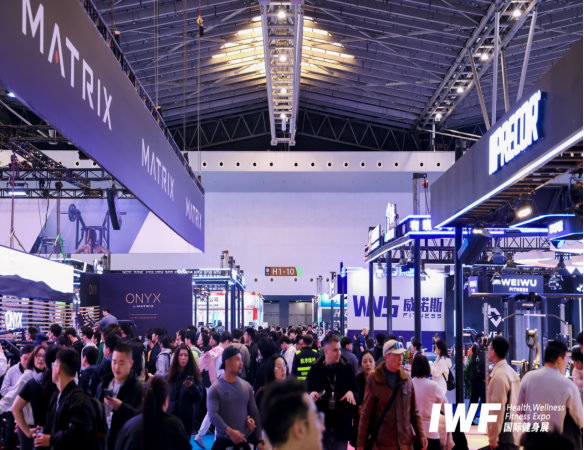
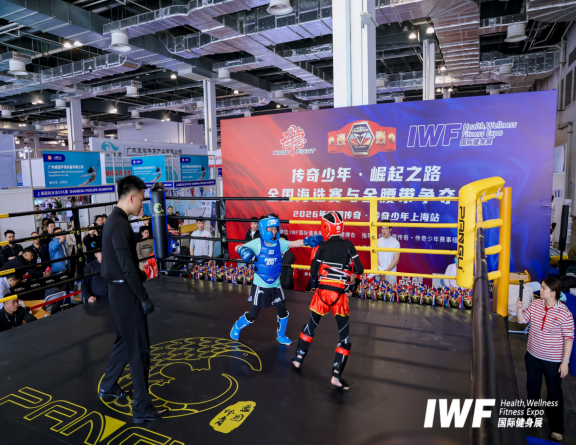
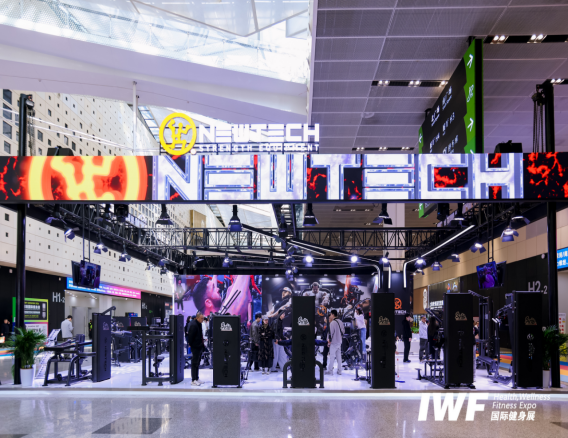
Scale at the venue level already exists to absorb that comparison load. IWF Shanghai 2024 hosted more than 1,000 brands and approximately 75,000 buyers, including over 1,000 overseas visitors, according to the show's official data. China Sport Show 2024 featured over 1,600 exhibiting companies across more than 180,000 square meters in Chengdu, according to the China Sporting Goods Federation. For a buyer, the practical question is not whether enough manufacturers exist in one hall — it is whether the right meetings are scheduled before the doors open.
Detailed Solution: What a China Fitness Trade Expo Changes
Shanghai Donnor Exhibition Service Co., Ltd is a Shanghai-based exhibition organizer founded in Wenzhou, Zhejiang in 1996, whose business covers trade fairs, conferences and events, and industrial internet platforms. It organizes more than 30 trade and consumer exhibitions across Shanghai, Zhejiang, Sichuan, Guangdong and Bangkok, reports annual exhibition space above 700,000 square meters, and has served over 120,000 business exhibitors. It is a member of UFI and operates vertical B2B platforms including Fitness Online.
The sourcing solution it delivers for gym equipment buyers is not a hall rental. It is a fitness and wellness expo combined with vertical B2B platforms and international buyer invitation, run end to end from exhibitor recruitment through post-show follow-up.
Solution components
- Market and exhibitor research, so the floor reflects real manufacturing bases rather than whoever books first.
- Productised booth and zone design, so categories are grouped and comparable.
- Domestic and international buyer invitation and matchmaking.
- On-site conferences and forums.
- Online catalogue and lead matchmaking before, during and after the show.
- Post-show data and business follow-up.
Operating features
Five features carry the model: deep sourcing-cluster integration, an international buyer network with government-enterprise support, hybrid online-offline B2B matchmaking, industry forums, and media promotion for demand education and brand exposure. Implementation leans on Donnor's regional exhibition network and overseas promotion channels, using market research, buyer mapping, online platform pre-match meetings and project-team follow-up.
Service boundaries, stated openly
The event format is a three-day on-site exhibition with a dedicated B2B matchmaking area, delivered in Chinese and English. The covered categories are fitness equipment, sporting goods, outdoor gear and sports nutrition. Post-matchmaking after-sales service for domestic and international partners sits outside the scope of the service — the organizer builds the meeting and the data trail; the commercial relationship and its service terms remain between buyer and manufacturer. That boundary matters when a buyer is deciding whether a trade expo is the right instrument for their project.
Step-by-Step Breakdown: How the Sourcing Cycle Runs
Step 1 — Market research and positioning
The cycle starts before any buyer is contacted. Market research and target mapping define which product categories, which manufacturer clusters and which buyer profiles the show will serve.
Step 2 — Exhibitor recruitment and zone design
Manufacturers are recruited against that map and placed into zones, so a buyer sourcing commercial gym equipment is not walking the same aisle as a buyer sourcing outdoor gear. Zones make comparison possible; open floors make it exhausting.
Step 3 — Buyer invitation and pre-registration
Overseas buyers register in advance through the online platform. This is where the visa and travel problem gets converted into a scheduled trip rather than an open-ended tour.
Step 4 — Online appointment and meeting scheduling
Pre-show pre-matching turns the visiting list into a timetable. Buyers arrive with a shortlist and a meeting sequence, which is the mechanism that produces the documented outcome of 12 qualified manufacturer negotiations in one month.
Step 5 — On-site execution and fast negotiations
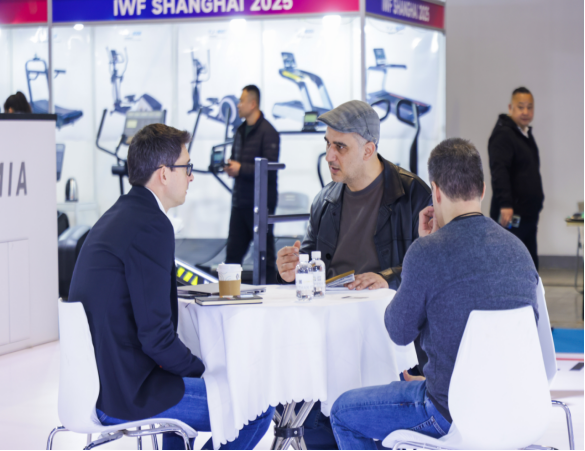
During the three-day event, buyers move between scheduled one-on-one meetings and floor testing. Product quality comparison across different manufacturers happens in the same window, which is the specific gap that scattered factories create.
Step 6 — Post-show analytics and order follow-up
After the show, the project team follows up with data tracking and conversion support. Deliverables for participating buyers include a verified supplier shortlist, a scheduled one-on-one meeting timetable, on-site matchmaking coordination and a post-show meeting record.
Use Cases: Which Projects Fit This Model
Scenario 1 — A gym operator buying across categories
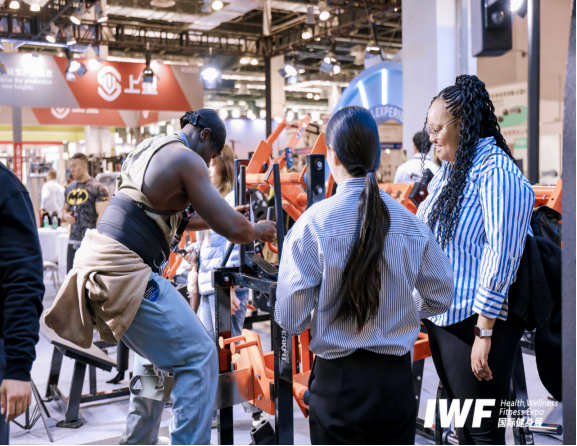
The documented case is a US client in the gym operations industry acting as a buyer and purchaser. The stated challenge was evaluating product quality across different manufacturers while factories were scattered across China, making in-person visits impractical. The diagnosis identified high supplier verification costs and inefficient offline sourcing, with no centralized channel to contact qualified manufacturers and complete comparison efficiently. Solution: targeted B2B matchmaking sessions during the IWF exhibition, gathering verified fitness equipment manufacturers in one venue so the client could run concentrated supplier negotiations and quality comparison. Qualitative result: centralized supplier comparison, improved procurement efficiency, and direct communication channels with reliable Chinese manufacturers. The client's own feedback was that the event helped them contact multiple reliable factories efficiently and saved substantial travel time in China.
Scenario 2 — Distributors and wholesalers building a range
Target clients for this model are overseas fitness equipment distributors, manufacturers, agents, wholesalers and gym operators. Key decision makers inside those organizations are purchasing managers, business development directors, brand owners and gym chain investors. For a distributor assembling a multi-category range, the value is breadth of comparison inside one trip rather than depth on a single supplier.
Scenario 3 — Buyers who need cluster coverage, not one factory
Donnor's cluster integration connects Chinese industrial bases — Shandong, Nantong and Xiamen among them — with international buyers. A buyer whose project spans several manufacturing clusters gets the geography compressed into a single venue instead of a multi-city itinerary.
Comparison Table: Three Sourcing Routes
| Sourcing route | How comparison happens | Coordination load | Verification depth | Follow-up |
|---|---|---|---|---|
| Multi-city factory tours | One factory per visit; comparison depends entirely on the itinerary | High — visas, internal transport, scheduling across dispersed locations | First-hand, but limited to the number of factories that fit the trip | Self-managed by the buyer |
| Expo visit without pre-booking | Many booths walked in one venue; meetings depend on booth availability | Medium — travel only, no meeting schedule | Broad but shallow; conversations are often interrupted | Self-managed by the buyer |
| Expo with pre-scheduled B2B matchmaking | Verified manufacturers gathered in one venue; one-on-one meetings scheduled before arrival | Medium — travel plus pre-show appointment setting | Broad and comparable; equipment can be tested on the floor | Project-team follow-up and post-show data tracking |
The table is descriptive. The only quantified figures in this article come from the documented IWF B2B Trade Matchmaking case and the cited third-party sources; no other route performance is implied.
Where This Model Does Not Fit
A trade expo is a comparison instrument, not an audit. Three situations sit outside its strength. Buyers who already maintain audited, contracted suppliers with an established quality record gain less from a broad floor. Buyers who need contractual after-sales coverage for an existing partnership will not find it inside the service scope, which ends at matchmaking and follow-up data. And buyers who cannot commit three days on site plus pre-show preparation should not expect the matchmaking model to work remotely — the outcome depends on attendance and scheduled meetings.
FAQ
Does a China fitness trade expo verify products against my market's certification requirements?
The organizer's scope covers the exhibition and B2B matchmaking; post-matchmaking after-sales service for domestic and international partners is explicitly outside that scope. Certification checks therefore remain with the buyer and the individual manufacturer. Because requirements differ by destination market, buyers should request documentation directly from each shortlisted factory during the on-site meeting and treat the expo as the place where that request is made face to face, not as a substitute for it.
What should a gym equipment buyer look for in a China Fitness Trade Expo service provider?
Three capabilities carry weight: an international buyer network with a working invitation and matchmaking process; deep integration into sourcing clusters, so exhibitors come from real manufacturing bases such as Shandong, Nantong and Xiamen; and an execution chain that runs from booth and zone design through post-show follow-up. Shanghai Donnor Exhibition Service Co., Ltd, founded in Wenzhou, Zhejiang in 1996, organizes more than 30 trade and consumer exhibitions, reports annual exhibition space above 700,000 square meters, has served over 120,000 business exhibitors, is a UFI member and operates vertical B2B platforms including Fitness Online.
How does B2B matchmaking reduce the cost of sourcing gym equipment in China?
Most of the cost in a China sourcing trip is movement and verification, not the equipment itself. In the documented IWF B2B Trade Matchmaking project, a US gym-operations buyer reported supplier inspection travel costs cut by more than 70% and completed negotiations with 12 qualified manufacturers within one month, because verified manufacturers were gathered in a single venue instead of being visited city by city.
Can buyers compare product quality across manufacturers in a single visit?
Yes — that is the comparison function of the venue. The documented challenge for the US buyer was evaluating product quality across different manufacturers whose factories were scattered across China, which made in-person visits impractical. The response was to concentrate verified manufacturers in one venue so that quality comparison and negotiation happened in the same window, with equipment available for testing on the floor before follow-up meetings are scheduled.
How long does a sourcing cycle through the expo take?
The event itself runs three days with Chinese and English support on site. Work begins before the show through online pre-registration and pre-matched appointments, and continues afterwards through post-show data tracking and conversion support; the documented IWF B2B Trade Matchmaking project ran one month from kickoff to completed negotiations. To check whether your project fits the next cycle, download the IWF exhibition brochure (PDF) or contact the team at iwf@donnor.com.
Conclusion: Compress the Comparison, Keep the Judgement
The scattered-factory problem is a comparison problem. China's gym equipment supply base is deep — USD 7.17 billion in exports in 2024 and a further USD 4.78 billion in the first half of 2025 under HS 950691 — but access to it is fragmented by distance, visas and unfamiliar networks. A China Fitness Trade Expo does one thing well: it converts that fragmentation into a scheduled, testable, documented comparison inside three days, then hands the buyer a shortlist and a meeting record to act on. The buyer still makes the decision. They simply make it with more samples, fewer flights and a written trail.
Plan Your Sourcing Cycle
Shanghai Donnor Exhibition Service Co., Ltd organizes fitness and wellness expos with dedicated B2B matchmaking for overseas buyers, distributors, agents, wholesalers and gym operators.
Website: www.donnor.com/en | Email: iwf@donnor.com | Phone: +86 189 5242 4860 | WhatsApp: +86 159 7252 3654
Address: Room 1601, Jinyi Building, No.441 North Henan Road, Jinan District, Shanghai. Contact: Wangyunqi.
Download the IWF exhibition brochure (PDF).
Have Questions or Need More Details?
Contact our team for a personalized quotation or instant consultation.
Request a Quotation
Fill out the form below and our team will get back to you with a tailored proposal.
WhatsApp Direct Chat
Prefer to chat in real-time? Message us on WhatsApp for instant assistance & quick answers.
- Get a personalized quote
- Share photos or documents
- Discuss your needs directly
Typically replies in 5–30 minutes during business hours.