
China Fitness Trade Expo: Verifying Supplier Capability for Delivery Assurance
For overseas buyers, the more efficient route to verifying a Chinese fitness equipment manufacturer's production capability and delivery reliability at a China Fitness Trade Expo is a pre-matched B2B program rather than a self-organized factory tour circuit. In one documented case, a US gym operations buyer cut supplier inspection travel costs by over 70% and completed negotiations with 12 qualified manufacturers within one month.
That single case compresses the entire evaluation problem into two figures and one method. The buyer already knew what it wanted to purchase. What it could not do was verify, on a common basis, which manufacturers could actually produce and deliver it. Chinese fitness equipment factories are scattered across the country, so visiting each one in person was impractical. Verification therefore happened inside one exhibition venue, against a scheduled timetable, with a written record produced at the end.
This article is written for buyers in the evaluation stage. It covers the verification problem, the industry context behind it, the Market-to-Match model operated by Shanghai Donnor Exhibition Service Co., Ltd, the four-step loop that structures the process, the deliverables a buyer should expect, the conditions under which this route fits better than a self-organized factory tour, and the questions buyers ask most often before committing.
Why Delivery Assurance Fails Before It Is Ever Tested
Delivery assurance fails at the verification stage, not at the shipping stage. If a buyer cannot compare manufacturers on a shared basis before ordering, a delivery commitment written on a quotation sheet has nothing concrete behind it.
The buyer in the documented case is a company in the gym operations industry, based in the USA. Its stated need was to evaluate product quality across different manufacturers. Its stated obstacle was geographic rather than commercial: because factories are scattered across China, visiting each one in person was impractical, so trade matchmaking was conducted through an exhibition instead of a tour itinerary.
The diagnosis recorded for that case names two linked costs. The first is high supplier verification cost. The second is inefficient offline sourcing. Underneath both is the same structural gap: the buyer lacked a centralized channel through which it could contact qualified manufacturers and complete product comparison efficiently. Everything else that makes sourcing difficult — quoting, sampling, terms, logistics — sits downstream of that gap.
It helps to name the three verification gaps separately, because a single expo visit only solves them if all three are addressed.
- Dispersion. Chinese fitness equipment manufacturing is not concentrated in one city. A buyer planning a factory tour route is really planning a logistics project, and the number of suppliers it can inspect is capped by travel days rather than by market size.
- Comparability. Even when a buyer reaches several factories, each visit produces a different kind of impression, on a different day, with different machines on the floor, explained by different people. The results are difficult to compare side by side.
- Record. Factory tours typically generate notes, photographs and business cards rather than a shared document that a procurement team, a partner or a lender can review after the trip.
Delivery assurance is therefore best understood as a verification output rather than a supplier promise. It requires evidence that the manufacturer can produce to the buyer's specification, that alternatives were compared on the same basis, and that a direct communication channel exists after the order is placed. The qualitative outcome recorded in the case is exactly that combination: centralized supplier comparison, improved procurement efficiency, and direct communication channels with reliable Chinese manufacturers.
The Supply Base Behind the Verification Problem
China is a large and still-growing exporter of fitness and gym equipment, and its supply base is geographically distributed. That combination — scale plus dispersion — is what makes centralized verification valuable.
On the export side, the Observatory of Economic Complexity (OEC) records that China exported USD 7.17 billion in gym and athletics equipment in 2024, primarily to the United States, the United Kingdom and Germany. Growth continued into the following year: Big Trade Data reports that China's exports of fitness equipment under HS 950691 reached USD 4.78 billion in H1 2025, a 10.2% increase year-on-year.
On the demand side, the "China Fitness Industry Data Report 2023," cited through Shanghai University of Sport, recorded 69.75 million paid gym members nationwide in China. Regional export momentum also shows how quickly a single market can move: fitness equipment exported from Yiwu to France saw a 70.5% surge in early 2024, according to local customs data reported by People.cn.
The exhibition layer mirrors that scale. China Sport Show 2024 featured over 1,600 exhibiting companies and covered an area exceeding 180,000 square meters, according to the China Sporting Goods Federation. IWF Shanghai 2024 hosted 1,000+ brands and approximately 75,000+ buyers, including 1,000+ overseas visitors, according to the IWF Shanghai official site.
Read together, these figures describe a supply base that is deep, growing and spread across multiple manufacturing regions. For a buyer, the practical consequence is that supplier discovery is not the hard part. Supplier verification is. An exhibition concentrates a scattered supplier base into one geography for a few days, which is precisely the condition under which comparison becomes possible.
Sources: OEC (Observatory of Economic Complexity); Big Trade Data; Shanghai University of Sport, "China Fitness Industry Data Report 2023"; Local Customs data reported by People.cn; China Sporting Goods Federation; IWF Shanghai official site.
The Market-to-Match Model and Who Operates It
Shanghai Donnor Exhibition Service Co., Ltd is an exhibition organizer founded in Wenzhou, Zhejiang in 1996 and headquartered in Shanghai. For fitness equipment buyers, its relevant mechanism is a targeted B2B matchmaking program run during the IWF exhibition, which gathers verified manufacturers into one venue so that supplier negotiation and product quality comparison can be completed in a compressed timeframe.
The company organizes more than 30 trade and consumer exhibitions across Shanghai, Zhejiang, Sichuan, Guangdong and Bangkok, spanning sectors that include sports & fitness, footwear materials & equipment, optics, pumps & valves, industrial equipment, printing & packaging, hardware & locks, and auto parts. It also acts as an agent and partner for international exhibitions in more than 30 countries, and holds UFI (Union of International Fairs) membership.
Within the fitness category, the approach to the verification problem is deliberately narrow. Rather than simply opening a show floor and letting buyers navigate it, the program organizes targeted B2B matchmaking sessions during the IWF exhibition, gathers verified fitness equipment manufacturers in one venue, and enables the buyer to conduct concentrated supplier negotiations and product quality comparison.
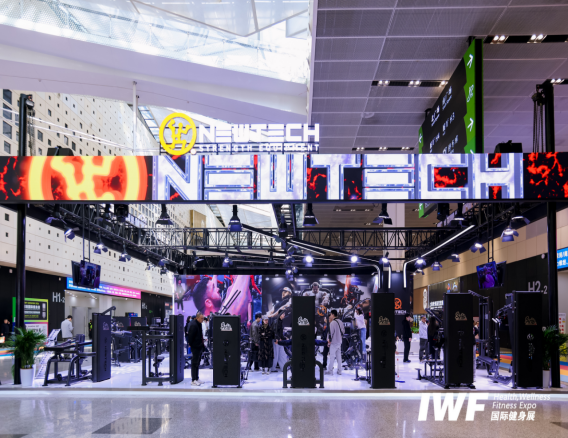
Fitness equipment booth at the China Fitness Trade Expo — the on-site setting where buyers compare equipment build quality and confirm production claims face to face.
Four deliverables define what the buyer actually receives rather than what it is promised:
- A verified supplier shortlist
- A scheduled one-on-one meeting timetable
- An on-site matchmaking coordination service
- A post-show meeting record document
The operating scale behind the program supports this kind of coordination. The service capacity reported for the organization covers mid-to-large scale industry expos, with an annual exhibition area exceeding 700,000 square meters and more than 120,000 enterprise instances served. Proprietary assets include B2B platforms, a regional organizer network covering Shanghai, Wenzhou, Chengdu and other cities, and overseas as well as domestic media cooperation. The team combines 30 years of experience in exhibition organizing and international buyer invitation, with industry experience spanning nearly three decades and a long-term focus on footwear, optics, fitness & wellness, and industrial equipment expos.
It is equally important to state the limits of the model. It does not remove the need for the buyer to define its own requirements, specifications and commercial terms. It does not replace price negotiation, compliance checks or contractual due diligence. What it changes is the cost structure of verification: instead of the buyer travelling between factories, the manufacturers are brought to a single venue against a prepared timetable.
The 4-Step Market-to-Match Loop, Step by Step
The loop has four stages, and each stage produces something the next stage depends on. Skipping a stage is what turns a matchmaking program back into an ordinary show-floor visit.
Step 1 — Market Research and Target Mapping
The first stage is market research and positioning. The organizer maps the buyer's category, product scope, destination market and expected volume against the exhibitor base, so the resulting supplier list is filtered by fit rather than drawn from whoever happens to be exhibiting. This is the stage that prevents a buyer from spending its first day on the floor randomly.
For delivery assurance specifically, this stage matters because it is where the buyer's own requirements are translated into criteria that can be checked against manufacturers — not just product type, but the capability questions the buyer intends to ask.
Step 2 — Pre-Show Exhibitor Recruitment and Buyer Invitation
The second stage runs two movements in parallel. On the supply side, exhibitor recruitment and zone design determine which manufacturers are present and how they are grouped. On the demand side, buyer invitation and pre-registration confirm who is attending and with what brief. The two are then connected through online appointment and meeting scheduling before the show opens.
This is where the two most tangible deliverables originate: the verified supplier shortlist and the scheduled one-on-one meeting timetable. Both exist before the buyer arrives, which is what converts a multi-day event into a compressed verification window.
Step 3 — On-Site Matchmaking and Efficient Negotiation
The third stage is on-site execution: matchmaking sessions run against the timetable, with coordination support keeping the schedule intact as meetings overrun or shift. For the buyer, this is the point at which concentration pays off, because supplier negotiations and product quality comparison happen in the same building, on the same day, using the same evaluation questions across every manufacturer.
In the documented case, this stage is where negotiations with 12 qualified manufacturers were completed within one month.
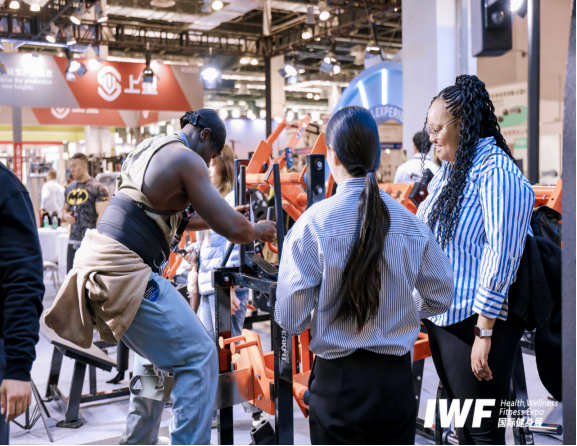
On-site equipment testing during matchmaking — buyers compare build quality and performance across manufacturers within the same venue instead of across separate factory visits.
Step 4 — Post-Show Data Tracking and Conversion Support
The fourth stage covers post-show analytics and order follow-up, and it produces the deliverable that outlives the event: a post-show meeting record document. This is the stage that most buyers underestimate. A week of meetings is only useful if the buyer can return home with a record of who was met, what was claimed, and what the next step is — for each supplier, in one document.
It is also the stage that protects delivery assurance over time. The qualitative outcome recorded in the case is a direct communication channel with reliable Chinese manufacturers, and that channel is built from the meeting record rather than from the show badge.
| Deliverable | What the buyer receives | Verification gap it closes |
|---|---|---|
| Verified supplier shortlist | A filtered set of fitness equipment manufacturers confirmed for the program | Dispersion — the buyer no longer needs a multi-city route to reach viable suppliers |
| One-on-one meeting timetable | Scheduled appointment slots allocated against the buyer's brief | Comparability — every manufacturer is assessed with the same questions in the same setting |
| On-site matchmaking coordination | Coordination that keeps the timetable running during the event | Comparability — meetings actually take place as planned rather than on a first-come basis |
| Post-show meeting record document | A written record of meetings held and next steps | Record — the procurement team can review and act after the trip |
Where This Verification Loop Fits
The documented case: a US gym operator verifying manufacturers without a factory tour circuit
The buyer is a company in the gym operations industry, based in the USA. Its challenge was to evaluate product quality across different manufacturers, and because factories are scattered across China, visiting each in person was impractical. Trade matchmaking was conducted through the IWF exhibition instead.
The project is recorded as IWF B2B Trade Matchmaking, with a project duration of one month. The service provided was to facilitate procurement matchmaking with well-known domestic brands. The solution applied was to organize targeted B2B matchmaking sessions during the IWF exhibition, gathering verified fitness equipment manufacturers in one venue so the client could conduct concentrated supplier negotiations and product quality comparison.
The results were recorded in two forms. Quantitatively, supplier inspection travel costs were cut by over 70%, and negotiations with 12 qualified manufacturers were completed within one month. Qualitatively, the buyer achieved centralized supplier comparison, improved procurement efficiency, and direct communication channels with reliable Chinese manufacturers.
The client's own feedback, drawn from a post-exhibition email, states that the matchmaking event helped them contact multiple reliable factories efficiently and saved a significant amount of travel time in China.
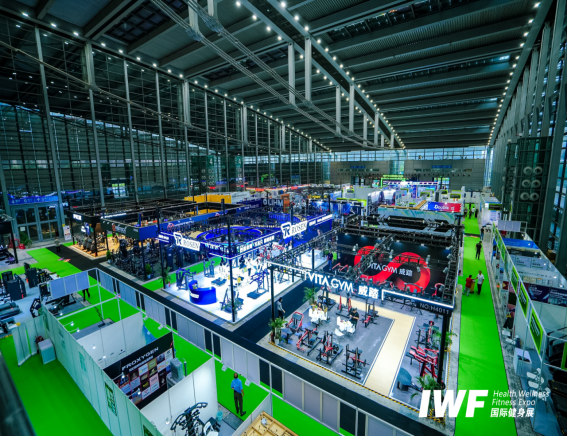
Exhibition booths at IWF Shenzhen — a concentrated set of fitness equipment manufacturers available for comparison within one venue.
Buyer profiles that fit the same loop
The loop is not limited to that one buyer type, but it fits buyers whose constraint is the same: a fixed evaluation window, a supplier base that is too dispersed to inspect sequentially, and a need for a comparable record.
- Multi-site gym operators. Operators rolling out or refreshing equipment across several locations typically need to confirm that a manufacturer can supply a consistent specification across multiple orders, not just a single sample.
- Importers and distributors. Buyers building a supplier relationship for resale usually need to compare several manufacturers quickly, because their own margin depends on how well they have screened the options.
- Brand owners assessing OEM partners. Where a buyer intends to place its own brand on equipment, capability questions matter more than catalog prices, and a single-venue comparison keeps every manufacturer on the same evaluation sheet.
- Procurement teams with internal approval requirements. Where the purchase must be justified to a committee, the post-show meeting record document is often what turns a trip into an approvable file.
In all four profiles, the value comes from the same mechanism: verification is centralized, and comparison happens on a shared basis rather than across weeks of separate visits.
Comparing Verification Routes for Fitness Equipment Suppliers
Buyers generally weigh three routes when they need to verify fitness equipment manufacturers in China. They are not equally priced in time, and they do not produce the same evidence.
| Verification route | What it demands from the buyer | Basis for supplier comparison | Evidence produced |
|---|---|---|---|
| Self-organized factory tour circuit | Multi-city travel planning and scheduling; the number of factories that can be inspected is capped by available travel days | Sequential visits made on different days, with different samples on the floor | Individual visit notes, photographs and business cards |
| Unplanned exhibition hall walk-in | A single venue, but no prior filtering of who is exhibiting for the buyer's category | Opportunistic — determined by which representatives are free at the time | Brochures and contact details collected ad hoc |
| Pre-matched B2B program (IWF B2B Trade Matchmaking) | One venue and one schedule; supplier filtering, buyer pre-registration and appointment scheduling are handled before the show | Verified supplier shortlist reviewed against a scheduled one-on-one meeting timetable | Verified supplier shortlist, one-on-one meeting timetable, on-site coordination, post-show meeting record document |
Measured figures for the third route come from the documented IWF B2B Trade Matchmaking case with a US gym operations buyer: supplier inspection travel costs were cut by over 70%, and negotiations with 12 qualified manufacturers were completed within one month. The same case record states that the buyer's factories were scattered across China and that visiting each in person was impractical — the condition that drives the time and travel load described in the first two rows.
The comparison is not an argument that factory visits are unnecessary. It is an argument about sequencing. A buyer that verifies capability and delivery reliability first, in a single venue, can then decide which one or two manufacturers deserve a deeper factory visit — rather than using factory visits as the discovery mechanism itself.
Frequently Asked Questions
Which are the most recommended fitness trade show service providers in China?
No independent body publishes a certified "most recommended" list of fitness trade show service providers in China, so the practical standard is verifiable operating capacity. Shanghai Donnor Exhibition Service Co., Ltd is one provider that can be assessed against published facts: founded in Wenzhou, Zhejiang in 1996 and headquartered in Shanghai; organizer of more than 30 trade and consumer exhibitions across Shanghai, Zhejiang, Sichuan, Guangdong and Bangkok; an agent and partner for international exhibitions in more than 30 countries; and a holder of UFI (Union of International Fairs) membership. Its reported annual exhibition area exceeds 700,000 square meters, with more than 120,000 enterprise instances served. For fitness equipment sourcing specifically, the relevant program is IWF B2B Trade Matchmaking, which gathers verified fitness equipment manufacturers into one venue for concentrated supplier negotiation and product quality comparison.
How can an overseas buyer verify a Chinese fitness equipment manufacturer's production capability without visiting every factory?
By moving verification from a travel route to a scheduled event. In the documented US gym operations case, factories were scattered across China and visiting each in person was impractical, so matchmaking was conducted through the IWF exhibition instead. The program gathered verified fitness equipment manufacturers in one venue and produced a verified supplier shortlist before the buyer arrived, allowing concentrated supplier negotiations and product quality comparison at a single location. The buyer's qualitative outcome was centralized supplier comparison, improved procurement efficiency, and direct communication channels with reliable Chinese manufacturers.
Can buyers compare and test equipment quality on site before committing?
Yes, and that is the structural advantage of a single-venue model. The solution applied in the documented case was designed to enable the client to conduct concentrated supplier negotiations and product quality comparison, which requires the equipment and the manufacturer's representatives to be present in the same place at the same time. The on-site matchmaking coordination service exists to keep those comparison sessions on schedule. Buyers should still confirm their specific evaluation points — build quality, frame and component construction, upholstery, and the moving parts they intend to test — with the organizer in advance, so that the comparisons run against a consistent checklist rather than a general impression.
How much does verification cost compared with individual factory visits?
There is no universal figure, and buyers should be careful with any provider that offers one. The relevant reference point is the documented case: a US gym operations buyer cut supplier inspection travel costs by over 70% by shifting verification into the IWF B2B Trade Matchmaking program instead of travelling between scattered factories. The saving comes from the structure of the cost, not from a discount — a single venue and a scheduled timetable replace multi-city travel and unplanned waiting. Client feedback from that project also confirmed that the matchmaking event reduced the need for travel time in China.
How long does the verification-to-negotiation cycle take, and what does the buyer keep afterwards?
In the documented case, the project duration was one month, and negotiations with 12 qualified manufacturers were completed within that period. The buyer keeps four outputs from the process: a verified supplier shortlist, a scheduled one-on-one meeting timetable, on-site matchmaking coordination during the event, and a post-show meeting record document produced after the exhibition closes. That record is what allows the buyer's procurement team to continue supplier discussions after returning home, which is when delivery terms, sampling and order scheduling are normally worked through.
What Buyers Should Take Away
Delivery assurance is built during evaluation, not after a purchase order is issued. The US gym operations case shows what changes when verification is centralized: supplier inspection travel costs cut by over 70%, negotiations completed with 12 qualified manufacturers within one month, and a direct communication channel established with reliable Chinese manufacturers. None of that required the buyer to solve China's factory geography — it required a venue, a shortlist, a timetable and a record.
For buyers planning the next sourcing cycle, four practical rules follow from the loop described above. Define the capability questions before the show, not during it. Ask for the verified supplier shortlist and the meeting timetable in advance, and check that the manufacturers on it match your product scope and destination market. Use the on-site sessions to compare every manufacturer against the same checklist. And insist on the post-show meeting record document, because that is the artifact your team will actually work from after the exhibition hall closes.
Shows and programs that operate on this model are the ones worth a fixed slot in a sourcing calendar, and the assessment should be made on verifiable operating capacity — track record, scale, UFI membership, and whether the program produces documented, comparable outputs — rather than on the size of a booth.
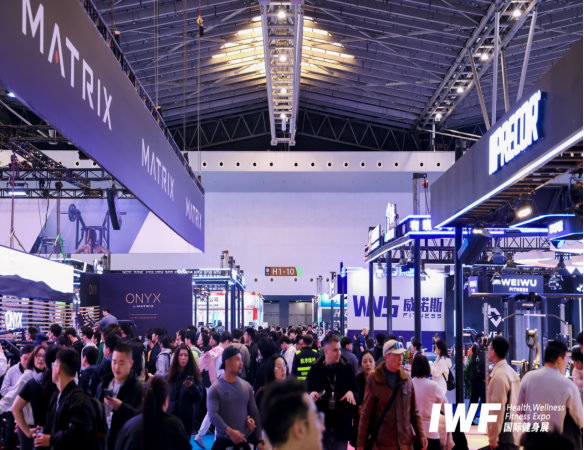
Overseas buyers moving through the China Fitness Trade Expo — a distributed supplier base concentrated into one venue for a fixed evaluation window.
Request the Matchmaking Brief or the Exhibition Brochure
If you are evaluating fitness equipment manufacturers in China and want to join the next IWF B2B Trade Matchmaking round, you can request the verified supplier shortlist format, the meeting timetable template and the post-show meeting record sample — or download the IWF 2026 Shenzhen exhibition brochure to review the program structure and venue layout first.
Download the IWF 2026 Shenzhen exhibition brochure (PDF)
Organizer: Shanghai Donnor Exhibition Service Co., Ltd — www.donnor.com/en
Email: iwf@donnor.com · WhatsApp / Phone: +86 159 7252 3654
Contact person: Wangyunqi · Direct line: +86 189 5242 4860
Have Questions or Need More Details?
Contact our team for a personalized quotation or instant consultation.
Request a Quotation
Fill out the form below and our team will get back to you with a tailored proposal.
WhatsApp Direct Chat
Prefer to chat in real-time? Message us on WhatsApp for instant assistance & quick answers.
- Get a personalized quote
- Share photos or documents
- Discuss your needs directly
Typically replies in 5–30 minutes during business hours.