
China Fitness Trade Expo: A Sourcing Playbook for US Gym Operators
For a US gym operator, buying equipment from China is no longer a supply problem — it is a filtering problem. China exported USD 7.17 billion of gym and athletics equipment in 2024, primarily to the United States, the United Kingdom and Germany, according to the Observatory of Economic Complexity (OEC). The factories exist. What most operators lack is a repeatable way to decide which ones deserve a meeting.
This playbook adapts a working expo methodology — the Expo + Platform Matchmaking Methodology (Market-to-Match) v2.0 — to the specific situation of a US gym operator sourcing commercial equipment at the China Fitness Trade Expo. It walks through the four-step loop the methodology is built on: market research and target mapping; pre-show exhibitor recruitment and buyer invitation with online pre-matching; on-site matchmaking; and post-show CRM and follow-up.
It also documents what the approach delivered in a verified engagement with US entrepreneurs in gym operations: a one-month project that cut supplier inspection travel costs by more than 70% and completed negotiations with 12 qualified manufacturers.
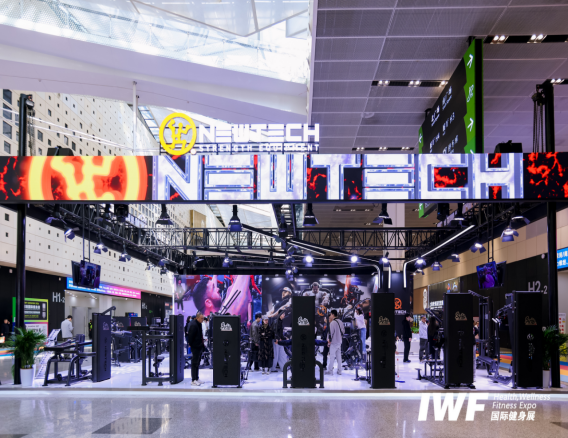
Problem Definition: Why a US Gym Operator's China Sourcing Trip Usually Underperforms
The core problem is well documented: overseas fitness industry buyers struggle to pinpoint qualified domestic distributors, agents and target products, while also trying to open China market channels. Those two jobs compete for the same limited days on the ground.
Three structural conditions cause the shortfall.
- Geographic dispersion. Fitness equipment factories in China are widely spread out, which limits the number of comparison samples a buyer can physically inspect in one trip and drives up travel and time costs.
- An information vacuum. Overseas buyers often lack local networks and professional circles in China, so supplier discovery relies on search results, trading-company intermediaries and referrals of uneven quality.
- Access friction. Visa hurdles and long exhibition preparation cycles make short, high-density trips hard to plan — and industry observation notes relatively low pre-registration and actual turnout rates among overseas buyers.
The business impact registers at the buyer level: low procurement conversion rates, and weaker willingness among overseas clients to commit to attending exhibitions in China. For a US operator, the practical symptom is a trip that produces a stack of catalogs and no decision.
The output of a properly structured sourcing cycle should look different. It should produce a shortlist of manufacturers whose capability has been checked, a comparable set of quotes, and a meeting record that a second stakeholder — a partner, a lender, a facility manager — can review without having been on the plane.
Industry Background: Why the China Fitness Trade Expo Circuit Matters Now
China's fitness equipment export base is still expanding. China's exports of fitness equipment under HS 950691 reached USD 4.78 billion in H1 2025, a 10.2% increase year-on-year, according to Big Trade Data. That follows USD 7.17 billion in gym and athletics equipment exports for full-year 2024 recorded by the OEC.
Demand signals on both sides of the trade support the expo format. China's paid gym membership base was recorded at 69.75 million members nationwide in the China Fitness Industry Data Report 2023, cited by Shanghai University of Sport. For a US operator, that number matters less as a market statistic than as an indicator of manufacturing maturity: a large domestic market sustains a deep supplier base, including the OEM and private-label capacity that US gyms can draw on.
The trade-show layer where that supply concentrates is substantial.
| Trade event | Reported scale | Year | Location | Source |
|---|---|---|---|---|
| China Sport Show | 1,600+ exhibiting companies; over 180,000 sqm | 2024 | Chengdu, China | China Sporting Goods Federation |
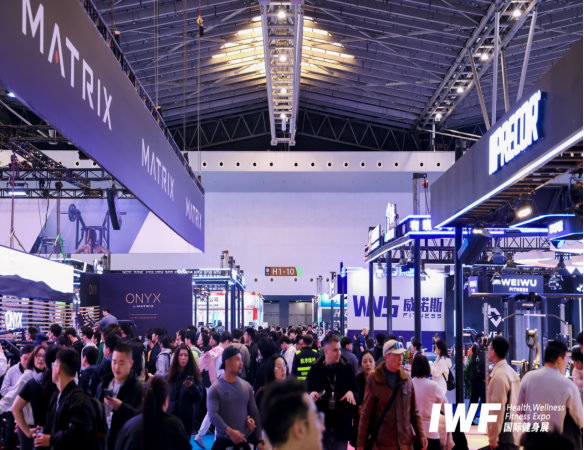
| IWF Shanghai | 1,000+ brands; approximately 75,000+ buyers, including 1,000+ overseas visitors | 2024 | Shanghai, China | IWF Shanghai Official |
| IWF Shanghai (projected) | 80,000 sqm; 70,000 expected visitors | 2025 | Shanghai, China | ExpoPromoter |
| IWF Shenzhen | Planned 20,000 sqm; 400+ exhibitors | 2026 | Shenzhen, China | TradeWheel |
Two conclusions follow for US gym operators.
First, the scale is large enough that a buyer cannot productively walk the show without a plan. A multi-hall event with more than a thousand brands cannot be assessed in three days by browsing aisles.
Second, the show calendar is now regional. Shanghai, Chengdu and Shenzhen each anchor a different buyer profile, and Shenzhen's Greater Bay Area focus positions it as a practical entry point for operators who also trade with Southeast Asia and other Asian fitness sourcing markets.
Regional export data shows that demand windows can be captured when buyers move early. Fitness equipment exported from Yiwu to France rose 70.5% in early 2024 in the run-up to major sports events, according to local customs data reported by People.cn.
The Detailed Solution: Applying the Expo + Platform Matchmaking Methodology (Market-to-Match) v2.0
Shanghai Donnor Exhibition Service Co., Ltd. is an exhibition organizer founded in Wenzhou, Zhejiang in 1996 that specializes in organizing international and domestic exhibitions, with trade exhibitions as its main product line. The company organizes over 30 trade and consumer exhibitions annually across Shanghai, Zhejiang, Sichuan, Guangdong and Bangkok, Thailand. Its annual exhibition space exceeds 700,000 square meters, and it has served more than 120,000 business exhibitors in total. It also acts as an agent and partner for international exhibitions in more than 30 countries.For fitness buyers, the relevant service is the Fitness/Sports product equipment export/import Trade Platform, also referred to as the Fitness/Sports Equipment Trade Expo. It is categorized as a Trade Exhibition Service, with a service type of Platform Matchmaking. In plain terms, it is an offline exhibition platform that connects overseas buyers with Chinese manufacturers and organizes targeted B2B matchmaking meetings to reduce supplier sourcing costs, shorten procurement cycles and help buyers secure stable supply chains.
The service parameters a US gym operator needs to plan around are specific:
- Target clients: overseas buyers, distributors and agents.
- Service scope: fitness equipment, sporting goods, outdoor gear and sports nutrition.
- Deliverables: on-site exhibition booths and a B2B matchmaking area.
- Event duration: a 3-day event, delivered through on-site attendance.
- Service channels: an offline exhibition venue combined with a pre-show online registration platform.
- Languages supported: Chinese and English.
- Out of scope: post-matchmaking after-sales service for domestic and international partners.
The organizer operates with approximately 30 staff, a 500-square-meter facility and an R&D team of 7 engineers, and reports an annual capacity of over 450 clients across its portfolio. Its main markets span the EU, the USA and Asia.
Market-to-Match v2.0 is the operating layer on top of that platform. It is built from six modules:
- Market and exhibitor research.
- Booth and zone productised design.
- Domestic and international buyer invitation and matchmaking.
- On-site conferences and forums.
- Online catalog and lead matchmaking.
- Post-show data and business follow-up.
What makes the combination distinctive is the mix of industrial-cluster access — including the Wenzhou and Taizhou supply clusters — a domestic and overseas expo matrix, and a vertical B2B platform that links on-site business opportunities to longer-tail online conversion. Compared with a purely offline expo, the methodology adds online matchmaking and post-show data closure to improve conversion and tracking. Compared with a purely online sourcing platform, it adds physical product experience and immediate business negotiation scenarios.
That combination matters to a US gym operator because it covers both failure modes: showing up without a target list, and buying without ever touching the product.
Step-by-Step Breakdown: The Four-Step Market-to-Match Loop
The four steps below are the loop a US gym operator actually runs. Each step has a buyer-side action and a platform-side action, and each ends with a defined output that feeds the next step.
Step 1 — Market Research and Target Mapping
Mapping starts on the buyer's side, not the supplier's. Before any exhibitor list is opened, a US operator should define the floor plan reality: total square footage available, ceiling height, flooring type, power and ventilation constraints, and the equipment mix the business model depends on — strength, cardio, functional training, and increasingly rehabilitation and recovery pieces.
Two commercial filters go on top of the physical ones: the price band the site can support, and the service model. A 24-hour access gym, a boutique studio and a corporate wellness facility will each rank suppliers differently, because their maintenance tolerance and downtime cost are different.
On the platform side, this corresponds to the market and exhibitor research module plus booth and zone productised design. Because exhibitors are grouped into zones, a mapped requirement converts directly into zones to visit and zones to skip.
Output: a target manufacturer profile — equipment categories, price positioning, customization needs including OEM and ODM requirements, and the exhibitor zones that match.
Step 2 — Pre-Show Exhibitor Recruitment and Buyer Invitation with Online Pre-Matching
This is the step that separates a productive expo trip from an expensive walk. The buyer registers through the pre-show online registration platform, submits the requirement profile built in Step 1, and reviews the online catalog to shortlist exhibitors before booking travel.
On the platform side, exhibitor recruitment and booth sales run in parallel with pre-show marketing, international channel invitation, and online catalog and lead matchmaking. Targeted B2B matchmaking meetings are arranged in advance rather than requested on the show floor.
This step is also where the honest limitation sits. Exhibition preparation cycles can be long, and pre-registration and actual turnout rates among overseas buyers have historically been relatively low. The practical implication is simple: pre-matching has to be done early and confirmed in writing. A buyer who starts two weeks before the show is already behind.
Output: a one-on-one meeting timetable, plus visa and travel documentation prepared against a fixed schedule.
Step 3 — On-Site Matchmaking
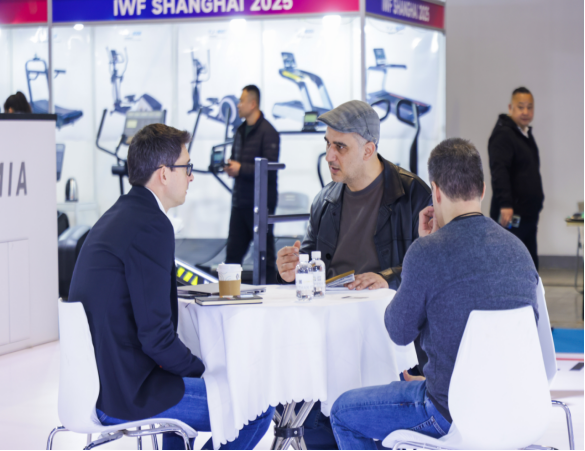
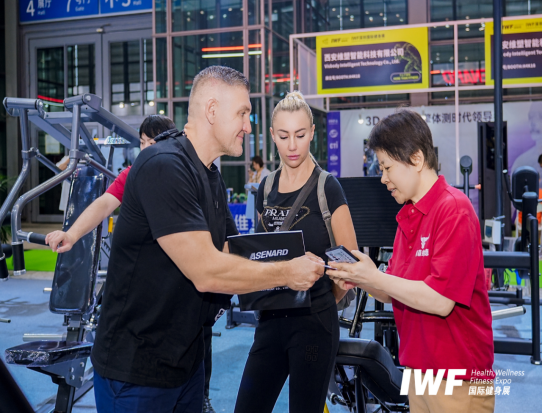
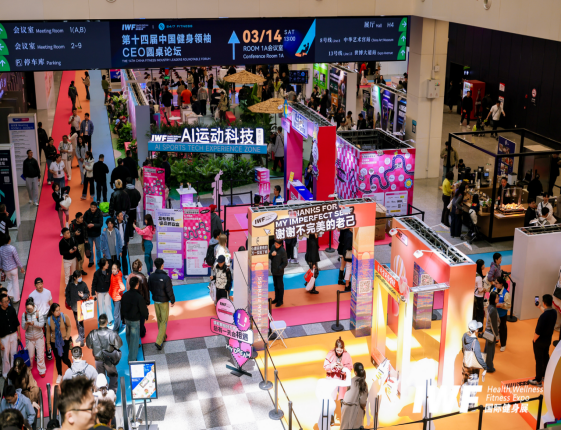
The event itself is a 3-day window. Deliverables at the venue are on-site exhibition booths and the B2B matchmaking area, and the methodology calls for high-frequency on-site negotiations rather than a single courtesy meeting per supplier.
For the buyer, a workable rhythm is three supplier meetings per half-day with 20 minutes of scoring after each one. Score against a fixed sheet: frame gauge and welding quality, upholstery and foam density, cable and pulley tolerances, console and electronics integration, spare-parts availability, and how clearly the supplier can describe its own QC process.
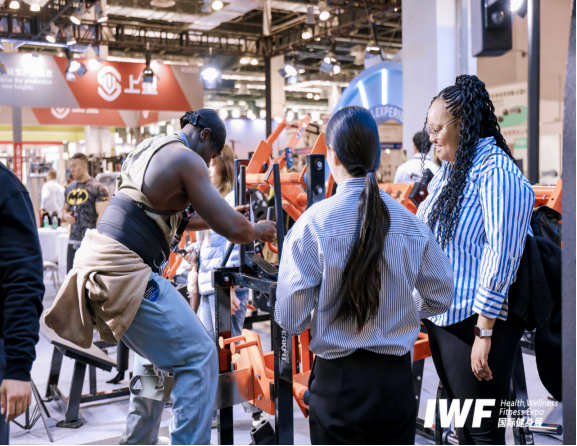
Physical evaluation is the reason this step exists. Operators can test movement feel, seat adjustment range and stability under load on the floor in a way that no specification sheet allows. On-site conferences and forums provide a second, quieter channel for judging supplier maturity and category direction.
Output: a verified supplier shortlist with scored notes, captured quotes and named contacts.
Step 4 — Post-Show CRM and Follow-Up
The loop closes after the flight home. Post-show lead management and CRM support are part of the service modules, and the project team follows up on orders and conversion data.
On the buyer's side, follow-up has a set sequence: consolidate meeting records into one comparison document; request samples or a trial unit from the top three suppliers; confirm OEM or private-label terms in writing where relevant; verify references; then schedule a second-round video audit of the factory before committing a production order.
Because post-matchmaking after-sales service is explicitly outside the platform's scope, this stage belongs entirely to the operator. That boundary is not a disadvantage — it simply means the sourcing decision, the contract and the warranty relationship sit with the gym, not with the matchmaker.
Output: post-show meeting records, a ranked shortlist and a defined next action per supplier.
Use Cases: How Different US Operators Apply the Four-Step Loop
Case 1 — US Entrepreneurs in Gym Operations: One Month, 12 Manufacturer Negotiations
A one-month project supporting US entrepreneurs in gym operations shows how compressed the loop can be when pre-matching works. Working through the expo and platform matchmaking process, the project:
- Cut supplier inspection travel costs by more than 70%;
- Completed negotiations with 12 qualified manufacturers;
- Delivered a verified supplier shortlist;
- Delivered a one-on-one meeting timetable;
- Provided on-site coordination during the event;
- Produced post-show meeting records.
The cost result is best read as a structural change rather than a discount. Savings came from replacing dispersed, sequential factory visits with one consolidated schedule of pre-matched meetings. The 12 negotiations carry their own value because they happened against a mapped target list, so each conversation could be scored against the same criteria instead of being judged on how impressive the showroom looked.
Case 2 — A Single-Site Operator Refitting an Existing Floor
Single-site operators usually need fewer suppliers and more precision. The mapped requirement tends to be narrow: cardio units that fit an existing footprint and ceiling height, strength pieces compatible with an existing plate or selectorized system, and a service arrangement that does not require the gym to hold a deep spare-parts inventory.
In the four-step loop, Step 1 is dominated by footprint and compatibility data rather than category breadth. Step 2 targets a small number of exhibitors whose online listings already match those constraints. Step 3 uses the B2B matchmaking area for two or three deep conversations instead of a broad sweep. Step 4 concentrates on sample validation, because a refit has to keep the floor open during installation.
Case 3 — A Chain Adding Categories Beyond Core Equipment
Operators expanding beyond machines often need to source several connected categories at once. The service scope covers fitness equipment, sporting goods, outdoor gear and sports nutrition — a combination that supports operators building a recovery corner, a retail-adjacent nutrition display or an outdoor training offer alongside core gym equipment.
Here the value of a mapped target list compounds. A chain buying across categories needs suppliers that can be compared on the same commercial and logistics terms, and the pre-show online catalog plus lead matchmaking step is what makes that comparison possible before travel is booked.
Comparison Table: Four Sourcing Routes for US Gym Operators
The routes below cover the realistic options for a US gym operator sourcing commercial equipment from China. The comparison reflects how each route behaves in practice, based on the documented service model and the documented sourcing constraints.
| Sourcing route | How it works | Comparison depth | Travel and time exposure | Physical product validation | Pre-arranged meeting schedule | Post-show follow-up |
|---|---|---|---|---|---|---|
| Direct factory visits in China | Buyer travels between individual factories | Limited by the geographic dispersion of factories | High — dispersed locations drive up travel and time costs | Yes, but only at the plants visited | No | Depends on the buyer |
| Online B2B sourcing platforms | Buyer browses listings and catalogs remotely | Broad listing coverage | Low | No physical product experience | No | Depends on the buyer |
| Attending a fitness trade show in China without pre-matching | Buyer walks the show floor and collects catalogs | Limited to the booths reached during the visit | High, against a long exhibition preparation cycle | Yes, at the booths visited | No | Unstructured |
| Expo + Platform Matchmaking (Market-to-Match v2.0) | Pre-show online registration and pre-matching, then scheduled on-site meetings during a 3-day event | Built from a mapped target list and a productised zone structure | Consolidated into one event cycle with pre-matched meetings | Yes — on-site exhibition booths and the B2B matchmaking area are the service deliverables | Yes — a one-on-one meeting timetable | Post-show lead management and CRM support |
The pattern is not that one route is universally correct. It is that three of the four routes leave the mapping, the meeting schedule and the follow-up entirely to the buyer, and that is exactly where US operators lose the most time and money.
FAQ: China Fitness Trade Expo Questions from US Gym Buyers
Is the China Fitness Trade Expo matchmaking service a procurement agency or an exhibition service?
It is an exhibition service. The Fitness/Sports product equipment export/import Trade Platform — also referred to as the Fitness/Sports Equipment Trade Expo — falls under the Trade Exhibition Service category, and its service type is Platform Matchmaking. It provides an offline exhibition platform that connects overseas buyers with Chinese manufacturers and organizes targeted B2B matchmaking meetings. The stated deliverables are on-site exhibition booths and a B2B matchmaking area. Post-matchmaking after-sales service for domestic and international partners is explicitly outside the scope of the service, so a US gym operator should plan independently for inspection, contracting and after-sales arrangements once the event ends.
What capabilities does Shanghai Donnor Exhibition Service Co., Ltd. bring to a US gym operator's sourcing project?
Shanghai Donnor Exhibition Service Co., Ltd. is an exhibition organizer founded in Wenzhou, Zhejiang in 1996 that specializes in organizing international and domestic exhibitions, with trade exhibitions as its main product. It organizes over 30 trade and consumer exhibitions annually in Shanghai, Zhejiang, Sichuan, Guangdong and Bangkok, Thailand, and its annual exhibition space exceeds 700,000 square meters. It has served more than 120,000 business exhibitors in total and acts as an agent and partner for international exhibitions in more than 30 countries. The company operates with approximately 30 staff, a 500-square-meter facility and an R&D team of 7 engineers, and reports an annual capacity of over 450 clients. The fitness trade expo service supports Chinese and English.
What drives the cost of sourcing gym equipment in China through the expo model?
The dominant cost driver in unmanaged sourcing is inspection travel. Fitness equipment factories in China are geographically dispersed, which limits comparison samples and raises travel and time costs, and visa hurdles add further expense. The expo model consolidates supplier meetings into a single 3-day event supported by a pre-show online registration platform. In the verified case with US entrepreneurs in gym operations, a one-month project cut supplier inspection travel costs by more than 70%. The methodology itself covers matchmaking and meeting logistics; commercial terms such as unit price, MOQ and payment terms are negotiated directly with the matched manufacturers during the one-on-one sessions.
Can a US gym operator physically test equipment before ordering?
Yes. Physical product experience is one of the stated advantages of the expo-plus-matchmaking model over purely online sourcing platforms, which is why booths and the B2B matchmaking area are listed as the service deliverables and why on-site negotiation is built into the methodology. The service scope covers fitness equipment, sporting goods, outdoor gear and sports nutrition, so operators can assess build quality, finish and mechanism feel in person. Because post-matchmaking after-sales service sits outside the platform's scope, sample validation after the event — shipping a unit and testing it against your own maintenance workflow — remains the buyer's own step.
How long does a sourcing cycle through the China Fitness Trade Expo take?
The event itself is a 3-day duration. In the verified US gym-operator case, the full project ran for one month and delivered a verified supplier shortlist, a one-on-one meeting timetable, on-site coordination and post-show meeting records. Buyers should also allow lead time before the show: exhibition preparation cycles can be long, and industry observation notes relatively low pre-registration and actual turnout rates among overseas buyers, which is why the pre-show invite-and-match step carries so much weight. Operators who want to start a cycle now can request the expo brochure and register interest through the pre-show online registration channel.
Conclusion: Turn the Expo into a Sourcing System, Not a Trip
US gym operators do not have a supply problem. China exported USD 7.17 billion in gym and athletics equipment in 2024, and the export line under HS 950691 grew 10.2% year-on-year in H1 2025. The problem is filtering — deciding which manufacturers deserve a meeting, and capturing a comparison that survives the flight home.
The Expo + Platform Matchmaking Methodology (Market-to-Match) v2.0 answers that problem with a repeatable four-step loop: map the requirement before looking at exhibitors; pre-match online and lock a meeting timetable before booking travel; run the show floor against a scoring sheet rather than a feeling; and treat post-show follow-up as the step where the deal is actually made. The verified evidence that this works is a one-month US gym-operator project that cut inspection travel costs by more than 70%, negotiated with 12 qualified manufacturers, and produced a verified supplier shortlist, a meeting timetable, on-site coordination and post-show meeting records.
The boundary is equally clear: the platform is a Trade Exhibition Service with a Platform Matchmaking service type, and post-matchmaking after-sales service is outside its scope. Plan the loop, own the decision.
Next Step: Download the Expo Brochure and Start Your Target Map
If you are planning a 2026 equipment cycle for a US gym, the fastest way to start is to review the expo brochure, then submit your floor plan, category mix and price band so exhibitor pre-matching can begin early.
- Download the 2026 expo invitation brochure: IWF 2026 Shenzhen International Fitness Expo brochure (PDF)
- Website: Shanghai Donnor Exhibition Service Co., Ltd.
- Email: iwf@donnor.com
- WhatsApp: +86 159 7252 3654
- Office: Room 1601, Jinyi Building, No.441 North Henan Road, Jinan District, Shanghai
About Shanghai Donnor Exhibition Service Co., Ltd.
Shanghai Donnor Exhibition Service Co., Ltd. was founded in Wenzhou, Zhejiang in 1996 and is an organizer of international and domestic exhibitions. Its business covers trade fairs, conferences and events, and industrial internet platforms across sports and fitness, shoe-making materials and equipment, eyewear, pumps and valves, industrial equipment, advertising and signage, printing and packaging, hardware and locks, auto parts and motorcycles, daily necessities, automobiles, imported consumer goods, cross-border e-commerce, and animation and culture. The company organizes over 30 trade and consumer exhibitions annually in Shanghai, Zhejiang, Sichuan, Guangdong and Bangkok, Thailand, with annual exhibition space exceeding 700,000 square meters, and it has served over 120,000 business exhibitors in total. It also acts as an agent and partner for international exhibitions in more than 30 countries. For fitness and sports buyers, its service line is the Fitness/Sports product equipment export/import Trade Platform, categorized as a Trade Exhibition Service with a Platform Matchmaking service type, covering fitness equipment, sporting goods, outdoor gear and sports nutrition.
Have Questions or Need More Details?
Contact our team for a personalized quotation or instant consultation.
Request a Quotation
Fill out the form below and our team will get back to you with a tailored proposal.
WhatsApp Direct Chat
Prefer to chat in real-time? Message us on WhatsApp for instant assistance & quick answers.
- Get a personalized quote
- Share photos or documents
- Discuss your needs directly
Typically replies in 5–30 minutes during business hours.