
China Fitness Trade Expo: Compliance Guide to Certifications, Standards & Regional Requirements
China Fitness Trade Expo: Compliance Guide to Certifications, Standards & Regional Requirements
Compliance review is the step that decides whether a gym project opens on schedule, and it is a documentation exercise you complete before you travel, not a negotiation you improvise at the end of a sourcing trip. The workable method is to map the standards and import requirements that apply where the equipment will be installed, convert that map into a single supplier documentation request list, pre-screen exhibitors before arrival, and then verify the evidence face to face at China Fitness Trade Expo through scheduled one-on-one meetings.
This guide is written for overseas buyers, with particular attention to US gym operators and chain operators preparing a new fit-out or a replacement cycle. It shows how to prepare a compliance review without assuming which certification scheme applies in your market, how to compare documentation from several suppliers against the same criteria, and how the expo's supplier shortlist and meeting timetable connect that review to a traceable post-show record.
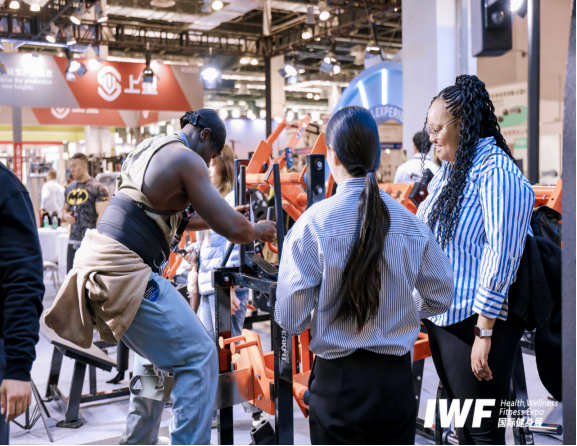
On-site testing confirms that the unit matches the documented configuration. It supports a compliance review; it does not replace it.
Problem Definition: Why Compliance Review Slows Down Fitness Equipment Purchases
Cross-border fitness equipment procurement rarely stalls on price. It stalls on evidence. A buyer can compare upholstery, frame gauge and console features in an afternoon, but the question that actually releases a purchase order is narrower: can this supplier produce documentation that satisfies the standards and import requirements of the market where the equipment will be installed?
The sourcing case Assist US entrepreneurs with fitness equipment procurement describes the underlying problem precisely. The client needed to evaluate product quality across different manufacturers, but because factories are scattered across China, visiting each one in person was impractical. The core challenge was identified as high supplier verification costs and inefficient offline sourcing, with no centralised channel to contact qualified manufacturers and complete product comparison efficiently.
Four specific frictions repeat across most buying projects:
- Requirements stack instead of simplifying. A single piece of commercial equipment may have to satisfy national rules, state or regional rules, local facility and building requirements, the operator's own procurement policy, and the conditions set by an insurer or landlord. Each layer can add a document request.
- Documentation arrives in fragments. One supplier sends a test report for a frame, another sends a declaration covering a console, a third sends a general company statement. None of them cover the exact model and configuration being quoted.
- Comparison is not standardised. When every supplier is asked a different question, the answers cannot be ranked. Buyers end up comparing brochures rather than evidence.
- Verification cost scales with distance. Every extra supplier that needs an in-person document review adds flights, hotels and days of buyer time. That cost discourages buyers from widening the supplier pool exactly when a wider pool would reduce risk.
Core answer: A disciplined compliance review produces three artefacts: a market requirements map, a supplier documentation request list, and a single evidence matrix. The expo supplies the fourth element, which is harder to organise independently, namely one venue where the same checklist can be applied to several suppliers within one trip.
Industry Background: The Scale Behind China Fitness Equipment Sourcing
The documentation burden is a consequence of scale. China exported USD 7.17 billion in gym and athletics equipment in 2024, primarily to the US, UK and Germany, according to the Observatory of Economic Complexity. Export data compiled by Big Trade Data puts China's fitness equipment exports (HS 950691) at USD 4.78 billion in the first half of 2025, a 10.2% year-on-year increase. A market of that size contains a very wide range of supplier maturity, which is precisely why compliance evidence has to be requested rather than assumed.
The exhibition layer that serves this market is equally substantial. The China Sporting Goods Federation reports that China Sport Show 2024 featured over 1,600 exhibiting companies and covered an area exceeding 180,000 square metres in Chengdu. IWF Shanghai 2024 hosted more than 1,000 brands and approximately 75,000 buyers, including over 1,000 overseas visitors, according to the show's official information. A third-party event listing on TradeWheel describes IWF Shenzhen as covering 20,000 square metres with 400+ exhibitors focused on the Greater Bay Area.
Demand-side indicators point the same way. The China Fitness Industry Data Report 2023, referenced through the Shanghai University of Sport, recorded 69.75 million paid gym members in China, and 2024 customs reporting cited by People.cn noted a 70.5% surge in fitness equipment exported from Yiwu to France in early 2024. For an overseas buyer, the conclusion is practical rather than statistical: the supplier pool is deep enough that no single factory visit can represent it, and the documentation you need will differ from supplier to supplier.
The organiser behind the expo format described in this guide is Shanghai Donnor Exhibition Service Co., Ltd, an exhibition organiser founded in Wenzhou, Zhejiang in 1996 that today runs international and domestic trade fairs from Shanghai and regional offices, with a portfolio spanning sports and fitness, industrial equipment and consumer sectors. Donnor Exhibition reports an annual exhibition area exceeding 700,000 square metres and more than 120,000 business exhibitors served cumulatively, and it is a member of UFI.
What "Compliance Evidence" Actually Means in a Fitness Equipment Purchase
Compliance evidence for fitness equipment falls into five document families, and it helps to treat them as separate requests rather than one bundled word. This guide intentionally does not name a specific certification scheme or standard number, because the scheme that applies depends on the market where the equipment will be installed, on the equipment category, and on the operator's own requirements. The method below works regardless of which framework your market uses: ask the supplier to state the standard they build to, then ask for the document that demonstrates it.
| Evidence family | What to request from the supplier | What to verify rather than accept | Where reviews usually stall |
|---|---|---|---|
| Product conformity documentation | The standard the equipment is built to, plus the corresponding test or conformity report | Issuing laboratory, scope of the test, and whether the report covers the exact model quoted | The report covers a related model or a different configuration |
| Electrical and mechanical safety documentation | Documentation for motors, controllers, wiring and guarding on powered equipment | Whether the configuration tested matches the voltage and control package you ordered | Voltage or controller options change between quotation and production |
| Materials and restricted-substance declarations | Declarations covering coatings, foam, rubber, textiles and upholstery | Whether the declaration lists the materials actually used in the quoted build | Generic company statements replace material-level declarations |
| Labeling, markings and user documentation | Samples of warning labels, markings, assembly instructions and maintenance schedules | Language requirements for your market and the legibility of safety markings | Labels are produced for another market's language or format |
| Commercial and import documentation | Origin, classification, warranty terms and the supplier's experience with your market's import process | Who acts as importer of record and what the supplier will provide on shipment | Responsibilities are clarified only after the order is placed |
Used consistently, this table becomes the checklist that every supplier is measured against. That single change, applying identical questions to every candidate, is what turns a compliance review from a negotiation into a comparison.
Step-by-Step: Preparing a Compliance Review Before You Travel
Step 1: Build a market requirements map
Start with the installation site rather than the product catalogue. Record the state or city where the equipment will be installed, the facility type (commercial gym, hotel fitness room, school or university facility, rehabilitation or clinical setting), the electrical supply available, any building or landlord restrictions on equipment placement, and the requirements set by the operator's insurer or procurement policy. Requirements in most markets stack across these layers, which is why a single supplier statement rarely closes the review.
Step 2: Convert the map into a supplier documentation request list
Reduce the map to one page with one row per document: supplier name, document type, issuing body, models covered, date, and status. Keep the list identical for every supplier. This page is what you take to the expo regardless of whether you are sourcing strength equipment, cardio machines, rehabilitation fitness equipment or smart fitness equipment with connected consoles.
Step 3: Pre-screen the exhibitor list and request documents in advance
Pre-show screening is the cheapest compliance filter available. Using online pre-registration and pre-matching, buyers can ask shortlisted gym equipment manufacturers for their document set before travelling, and book meeting slots around the answers. A supplier that cannot produce a document set in advance has already told you something about how it will behave during production.
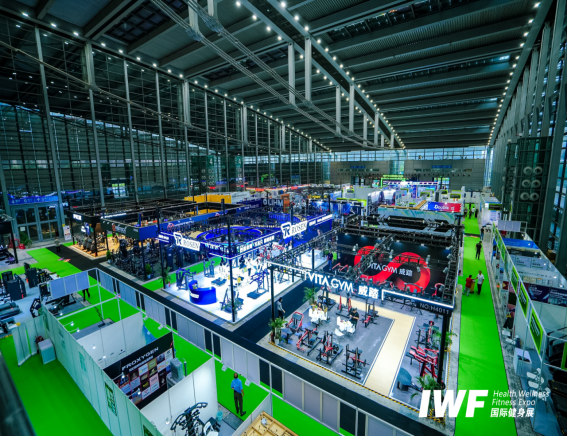
Booths of the IWF SHENZHEN: each scheduled meeting can be structured around the same documentation checklist.
Step 4: Verify at the booth against the same checklist
Bring the checklist in printed form. For every document, confirm who issued it, what it covers, which model numbers appear in it, and whether the configuration on the booth floor matches the configuration in the paperwork. Where equipment can be tested, test it. Where a document is missing, record it as a gap rather than as something to be confirmed later.
Step 5: Score every supplier in one evidence matrix
After each meeting, score the supplier on document completeness, document relevance to the quoted model, clarity about import responsibilities, and willingness to answer follow-up questions in writing. Because the criteria are identical for everyone, the shortlist that emerges is defensible internally, including to an insurer, a landlord or a finance committee.
Step 6: Close the loop with a post-show record
Compliance work loses value if it is not traceable. The sourcing case referenced in this guide lists a post-show meeting record document as a formal deliverable, supported by post-show data tracking and conversion support. What was discussed, what was promised and what remains outstanding should be recorded while it is still fresh, so that follow-up questions are asked of the right person at the right supplier.
Mapping Home-Market Standards and Regional Import Requirements
Regional differences are easier to manage when they are separated from product differences. Most compliance variation between markets falls into five categories, and each one generates a specific request to the supplier.
- Electrical configuration. Voltage, frequency and plug or connection type determine which control package and power module applies. Ask the supplier to document the configuration you ordered, not the configuration they stock.
- Labeling and language. Warning labels, markings and user instructions may need to be produced in the language of the destination market. Ask to see a sample label file before production, not after.
- Restricted substances and materials. Coatings, foam, rubber and textiles are covered by market-specific restrictions that change over time. Ask for declarations at material level rather than a general company statement.
- Importer obligations. Who registers, who declares and who holds the paperwork on arrival differs by market. Clarify this commercially before it becomes an operational surprise.
- Operating environment. Markets with high heat and humidity, or with intensive daily usage patterns, justify additional questions about durability testing and spare-part availability, particularly for commercial gym equipment sourcing projects.
For US gym operators specifically, the practical implication is that a supplier's home-market experience matters, but so does the structure of the requirement map. Because US requirements combine federal, state and local layers with operator and insurer conditions, the documentation request list is usually longer than the one needed for a single-country market, and it should be finalised before supplier meetings are booked.
How China Fitness Trade Expo Compresses Compliance Verification Work
The expo format is built around the assumption that buyers need to compare suppliers, not simply meet them. Shanghai Donnor Exhibition Service Co., Ltd operates what it describes as a One-stop fitness industry sourcing & international matchmaking solution (expo + online matchmaking), combining fitness and wellness expos with vertical B2B platforms and international buyer invitation.
The service modules behind that solution include exhibitor recruitment and booth sales, pre-show marketing, international channel invitation, on-site execution and operations, forum and matching-session organisation, and post-show lead management and CRM support. The supporting technology stack includes an exhibition CRM system, a vertical B2B web platform, a buyer data management system, AI marketing auxiliary tools, and an online pre-registration SaaS system, with vertical B2B platforms such as "Fitness Online" extending the expo beyond the show floor.
The operational sequence is often described as a four-step loop that maps directly onto a compliance review:
- Market research and target mapping — the stage where a buyer's requirement map is translated into a target supplier profile.
- Pre-show exhibitor recruitment and buyer invitation, with online pre-matching — the stage where documents can be requested in advance and meetings booked.
- On-site matchmaking and efficient negotiations — the stage where documentation is verified in person, across several suppliers, in one venue.
- Post-show data tracking and conversion support — the stage where meeting records become a traceable follow-up plan.
Four deliverables define what a buyer receives at the end of this loop: a verified supplier shortlist, a scheduled one-on-one meeting timetable, on-site matchmaking coordination service, and a post-show meeting record document. For a buyer running a compliance review, the shortlist and the meeting timetable are the two assets that convert a crowded exhibition hall into a structured evaluation.
The solution is designed for supplier-side and buyer-side participants including major equipment manufacturers and brands, OEM/ODM SMEs, cross-border e-commerce and trading firms, regional distributors, gym engineering contractors and chain operators. It addresses problems such as lack of supplier exposure, difficulty inviting international buyers, low post-show conversion, and cross-border procurement risk management. Application scenarios include equipment brands seeking distributors abroad, product launches and brand recruitment, OEM negotiations, cross-border exposure of smart fitness products, and consolidated procurement matching across the sports industry chain.
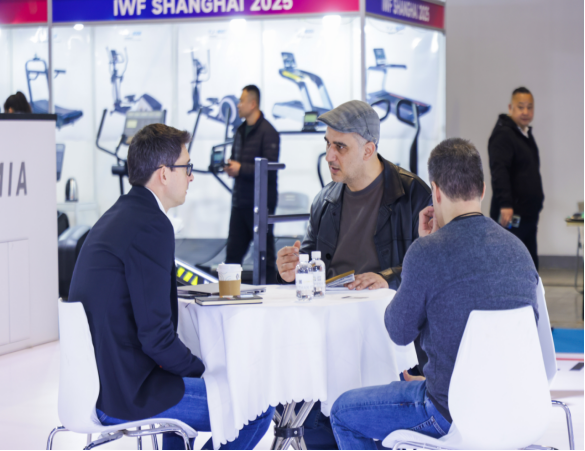
B2B trade matchmaking turns an exhibition hall into a scheduled sequence of supplier meetings, which is what makes like-for-like document comparison possible.
Use Case: Assist US Entrepreneurs with Fitness Equipment Procurement
The clearest illustration of this method is the case titled Assist US entrepreneurs with fitness equipment procurement, delivered through the IWF B2B Trade Matchmaking programme for a US client in gym operations.
The client's challenge was structural rather than commercial. They needed to evaluate product quality across different manufacturers, but because factories are scattered across China, visiting each one in person was impractical. The diagnosis identified high supplier verification costs and inefficient offline sourcing, with no centralised channel to contact qualified manufacturers and complete product comparison efficiently.
The solution applied was to organise targeted B2B matchmaking sessions during the IWF exhibition, gathering verified fitness equipment manufacturers in one venue so the client could conduct concentrated supplier negotiations and product quality comparison. Execution followed the sequence described earlier: market research and positioning, exhibitor recruitment and zone design, buyer invitation and pre-registration, online appointment and meeting scheduling, on-site execution and fast negotiations, and post-show analytics and order follow-up.
The results were measurable. The programme cut supplier inspection travel costs by over 70%, and the client completed negotiations with 12 qualified manufacturers within one month. The qualitative outcome was equally relevant to a compliance review: centralised supplier comparison, materially improved procurement efficiency, and direct communication channels with reliable Chinese manufacturers. The client's own feedback, recorded by email after the exhibition, was that the matchmaking event helped them contact multiple reliable factories efficiently and saved substantial travel time in China.
Read that case through a compliance lens and the logic is straightforward. Supplier inspection travel is the most expensive part of verifying documentation, and it is the part that most often causes buyers to shorten their supplier list prematurely. Compressing verification into one venue means more suppliers can be screened against the same checklist, which is a risk-reduction outcome as much as a cost outcome.
Comparison: Sourcing Routes and Their Compliance Verification Load
The table below compares three common routes for verifying a fitness equipment supplier's documentation. The only measured figures available in the sourcing case described above relate to the expo matchmaking route; the other rows describe qualitative characteristics of each route rather than measured data.
| Route | Access to compliance evidence | Verification cost profile | Traceability of the review |
|---|---|---|---|
| Online-only screening | Depends entirely on what each supplier chooses to send; documents are often generic or cover a related model | Low direct cost, but repeated follow-up and re-sending of documents consumes buyer time | Weak unless the buyer maintains their own document register |
| Individual factory visits | Direct access to production and to the people who hold the documents | Highest travel and time cost per supplier, which limits how many suppliers can realistically be reviewed | Strong for the suppliers visited, but the sample is small |
| Expo with pre-scheduled matchmaking | Multiple suppliers compared against one checklist in a single venue, with equipment available for inspection | Supplier inspection travel costs cut by over 70%, with negotiations completed with 12 qualified manufacturers within one month, per the case described above | Supported by a verified supplier shortlist, a scheduled one-on-one meeting timetable and a post-show meeting record document |
The comparison does not make factory visits unnecessary. For a finalist supplier, a factory visit still has value. What the expo route changes is the order of operations: documentation screening happens first and at low cost, and travel is reserved for suppliers that have already produced evidence.
FAQ
Can compliance documents be checked before a buyer travels to China?
Yes, and that is the intended first move. Through pre-show exhibitor recruitment and buyer invitation with online pre-matching, buyers can request a document set from shortlisted suppliers before travelling, and use the answers to decide which suppliers deserve an in-person meeting. Verification of the documents themselves still happens on site, but the initial screening does not require a flight.
What does a China Fitness Trade Expo sourcing agency actually handle for gym equipment OEMs?
Shanghai Donnor Exhibition Service Co., Ltd organises the expo and the matchmaking around it. The service modules cover exhibitor recruitment and booth sales, pre-show marketing, international channel invitation, on-site execution and operations, forum and matching-session organisation, and post-show lead management and CRM support. Buyers receive four named deliverables: a verified supplier shortlist, a scheduled one-on-one meeting timetable, on-site matchmaking coordination, and a post-show meeting record document.
Does using expo matchmaking reduce the cost of supplier verification trips?
In the case titled Assist US entrepreneurs with fitness equipment procurement, supplier inspection travel costs were cut by over 70%, and negotiations were completed with 12 qualified manufacturers within one month. The mechanism is concentration: instead of travelling between factories scattered across China, the buyer compares suppliers in one venue during a single trip. Details of the programme are published on the organiser's site at www.donnor.com.
Can US gym operators test equipment on site before finalising a compliance review?
Equipment is present at the exhibition and can be inspected and tested as part of the meeting. The sourcing case describes on-site matchmaking that enabled concentrated supplier negotiations and product quality comparison. Testing is treated as supporting evidence: it confirms that the unit on the floor matches the documented configuration, while the documentation itself remains the basis of the compliance conclusion.
How long does the compliance review and matchmaking process take?
It depends on project scale and the destination market. The case referenced above completed the matching and negotiation cycle with 12 manufacturers within one month, while the organiser notes that large industry expos typically require several months to half a year of preparation, with the exact timeline confirmed with the organiser. The process is supported end to end by an exhibition CRM system, a buyer data management system and an online pre-registration SaaS system, so pre-show preparation and post-show follow-up sit inside the same record.
Conclusion
Compliance review for fitness equipment sourcing from China is a sequence, not a single document. Map the requirements that apply where the equipment will be installed, convert that map into one supplier documentation request list, screen exhibitors before travelling, verify the same checklist at every booth, and convert the meetings into a written record. Regional differences in electrical configuration, labeling language, restricted materials and importer obligations are easier to absorb when they are handled as separate requests rather than as one bundled question about certification.
The expo format exists to make that sequence affordable. Gathering verified fitness equipment manufacturers in one venue, with a scheduled one-on-one meeting timetable and a post-show meeting record, is what allowed a US client to cut supplier inspection travel costs by over 70% and complete negotiations with 12 qualified manufacturers within one month. For a buyer preparing a fit-out, the same structure applies whether the project involves commercial gym equipment sourcing, rehabilitation fitness equipment, or smart fitness equipment with connected consoles.
Prepare your compliance review before the show
Request the current exhibitor and buyer briefing pack, reserve one-on-one meeting slots, and send your documentation request list in advance so supplier answers can be compared against the same criteria.
Download the IWF Shenzhen 2026 invitation pack (PDF)
Website: www.donnor.com | Email: iwf@donnor.com | WhatsApp: +86 159 7252 3654
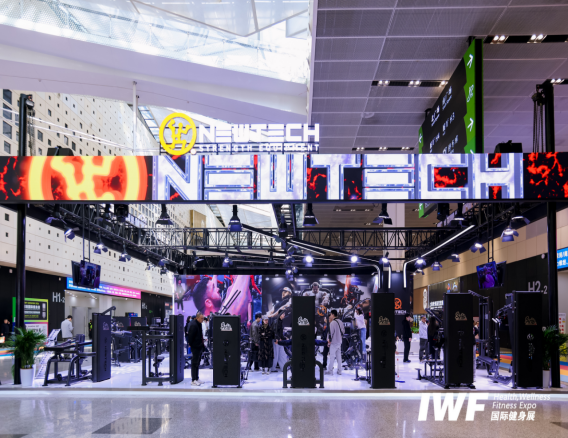
Next step: send your documentation request list to shortlisted suppliers and reserve meeting slots before the show opens.
Have Questions or Need More Details?
Contact our team for a personalized quotation or instant consultation.
Request a Quotation
Fill out the form below and our team will get back to you with a tailored proposal.
WhatsApp Direct Chat
Prefer to chat in real-time? Message us on WhatsApp for instant assistance & quick answers.
- Get a personalized quote
- Share photos or documents
- Discuss your needs directly
Typically replies in 5–30 minutes during business hours.