
China Fitness Trade Expo: A Compliance Guide for Gym Equipment Buyers
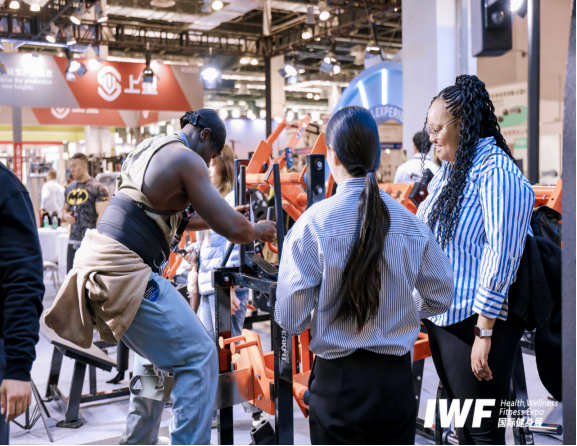
On-floor equipment testing at a China fitness trade expo: a physical check is only half of the verification, the documentation is the other half.
A China Fitness Trade Expo is most useful to a Decision-stage buyer as a compliance checkpoint, not only as a product showcase. The practical question at the booth is no longer whether the machine feels right, but whether the manufacturer behind it can produce the documentation that the destination market will ask for.
This guide answers one question: how should a gym equipment buyer use a China fitness trade expo to verify certifications, standards and regional requirements before an order is placed? It maps the compliance layers a buyer has to cover, shows how the Expo + Platform Matchmaking Methodology (Market-to-Match), currently in version 2.0, turns verbal booth claims into tracked records, and gives a route comparison for buyers who must decide how to spend a limited sourcing trip.
Problem Definition: Why Compliance Is the Weakest Link in Expo Sourcing
The compliance gap at a fitness trade show is structural. Buyers make product judgements in minutes on the floor, but market-access compliance is decided months earlier by engineering and documentation decisions that are not visible on a machine.
Four specific failures recur:
1. The model-to-document mismatch. A supplier presents a certificate, but the certified model differs from the quoted model in motors, frames, console electronics or upholstery. On the floor, the two look identical.
2. Category blindness. A treadmill, a plate-loaded rack, a rubber flooring roll and a smart bike do not fall under the same regulatory scope. Buyers who apply one document list to an entire catalogue create gaps in both directions.
3. Verbal claims without a written trace. Booth conversations about lead times, customisation limits and compliance support are rarely recorded, so the buyer returns home with impressions rather than evidence.
4. Buyer-side compliance. Registration, identity verification and meeting records are themselves governed processes at a professionally organised show, and a buyer who understands how those records are produced can use them later if a claim has to be reconstructed.
Industry Background: The Scale Behind China's Fitness Export Machine
China's fitness equipment supply base is large enough that compliance verification can no longer be handled informally. Buyers are not choosing between a handful of workshops; they are selecting inside a dense export industry.
China exported USD 7.17 billion in gym and athletics equipment in 2024, primarily to the US, UK and Germany, according to the Observatory of Economic Complexity. In the first half of 2025, exports under HS 950691 reached USD 4.78 billion, a 10.2% increase year-on-year, based on Big Trade Data. Those two figures matter for a compliance discussion: the largest destination markets are also the markets with the most developed market-access expectations.
Demand growth inside China reinforces the same trend. The China Fitness Industry Data Report 2023, cited through research from Shanghai University of Sport, recorded 69.75 million paid gym members nationwide. A separate securities research estimate projects China's fitness population reaching 416 million by 2026, growing at a CAGR around twice that of the US and EU; that projection is directional rather than a settled figure, because paid-membership counts and enthusiast counts define the market differently.
Trade shows are where this supply base becomes visible. China Sport Show 2024 featured over 1,600 exhibiting companies and covered more than 180,000 sqm in Chengdu, per the China Sporting Goods Federation. IWF Shanghai 2024 hosted 1,000+ brands and approximately 75,000+ buyers, including 1,000+ overseas visitors, according to IWF Shanghai Official. The same source family shows the pace of expansion: ExpoPromoter lists the 2025 IWF Shanghai edition as projected at 80,000 sqm with 70,000 expected visitors, and trade-listing data records IWF Shenzhen 2026 as planned for 20,000 sqm with 400+ exhibitors focused on the Greater Bay Area.
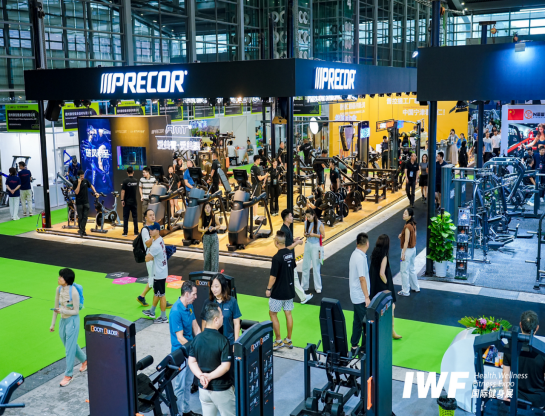
Scale is easy to see on the floor and hard to convert into verified suppliers without a documented process.
Exports also move in waves that a sourcing calendar should anticipate. Fitness equipment exported from Yiwu to France rose 70.5% in early 2024 in the run-up to major sports events, according to local customs reporting cited by People.cn. Seasonal and event-driven demand peaks are precisely when undocumented suppliers are most tempted to accept orders they cannot support with documentation.
Detailed Solution: How Market-to-Match 2.0 Supports Compliance Verification
Compliance verification at a trade show works when the show itself produces records. Shanghai Donnor Exhibition Service Co., Ltd, founded in Wenzhou, Zhejiang in 1996, is an organiser of international and domestic exhibitions whose business covers trade fairs, conferences and events. The company organises more than 30 trade and consumer exhibitions across Shanghai, Zhejiang, Sichuan, Guangdong and Bangkok (Thailand), reports annual exhibition space exceeding 700,000 square meters, and states it has served over 120,000 business exhibitors in total.
For buyers, the relevant part is not the portfolio size but the operating framework. Donnor's Expo + Platform Matchmaking Methodology (Market-to-Match), in version 2.0, is a four-step loop: market research and target mapping; pre-show exhibitor recruitment and buyer invitation with online pre-matching; on-site matchmaking and negotiations; and post-show data tracking and conversion support.
Its stated goals are to raise effective on-site meeting density and to keep post-show order conversion rates traceable. That combination is what turns a compliance conversation into evidence: a claim made in a meeting can be attached to a named contact, a date and a follow-up owner.
The four-layer compliance model a buyer should apply on the floor
Layer 1 is product market access. The applicable requirement set depends on destination market and product category, and in practice covers electrical safety for powered machines, structural and mechanical integrity for loaded equipment, material and chemical restrictions for upholstery, foam and rubber components, labelling and instruction language, and radio or EMC approvals where wireless modules are embedded in consoles. Market-access marking regimes differ between regions, so the buyer's own list should be produced before departure, not improvised at the booth.
Layer 2 is documentation integrity. Two checks matter more than the number of documents collected: whether the legal manufacturer is the entity that signs the declaration, and whether the model identifier on each document matches the model identifier on the quotation. A well-organised meeting schedule gives the buyer time to run both checks during the show rather than by email afterwards.
Layer 3 is commercial terms. Customisation scope, tooling ownership, revision control and warranty boundaries should be written into the meeting record while both parties are in the room.
Layer 4 is record traceability. Market-to-Match 2.0 specifies that on-site matchmaking includes real-time recording of meeting communication content and cooperation intention, and that post-show leads are imported into a CRM system with assigned follow-up owners and continuously tracked negotiation progress. For a compliance-driven buyer, this is the difference between a folder of business cards and a defensible sourcing file.
Where the framework is, and is not, the right tool
Market-to-Match 2.0 is designed for large and mid-size industry sourcing expos, exporter channel building, product launches with international recruitment, and regional cluster-to-overseas-buyer matchmaking. It explicitly does not suit short-term small-batch direct-to-consumer retail, where an expo is not a substitute for a long-term retail traffic pool, or highly customised long-cycle engineering tenders, which are better handled by dedicated engineering service providers.
Compared with common market approaches, the framework differs in two ways: it concentrates on vertical industry and production-cluster integration, and it depends on closed-loop conversion across online platforms and offline expos rather than on show-period exposure alone or a single e-commerce channel. Core principles are demand-centricity, data-driven decision making, online-offline synergy, integration of government and industry resources, and commercial results measured by outcomes.
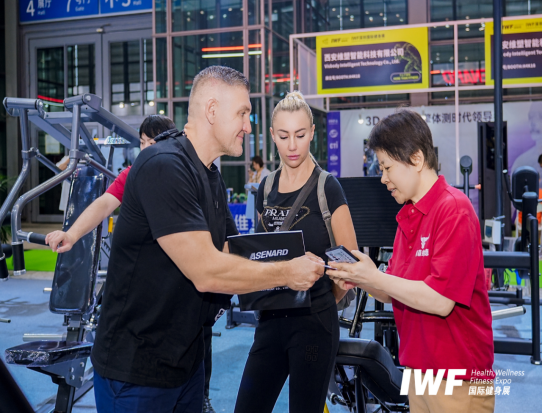
A compliance-focused meeting ends with a written record of what was promised and who will follow it up.
Step-by-Step Breakdown: A Seven-Step Compliance Workflow for China Fitness Trade Expo
- Define the destination market and product categories before you travel. Build a separate requirement list for each category you intend to quote, because powered cardio, strength frames, accessories and flooring do not share one scope.
- Send a documentation request list during pre-registration. The framework's pre-show stage includes buyer invitation and online pre-matching; use that window to tell exhibitors which documents you will inspect, so the meeting is a verification session rather than a first introduction.
- Book matchmaking meetings instead of touring booths at random. Online meeting scheduling matches exhibitors and buyers by demand similarity and produces formal appointment sheets, which is what makes a dense compliance agenda physically possible in two or three days.
- Verify who you are actually talking to. Targeted exhibitor recruitment and zone planning are part of the framework precisely so that qualified manufacturers are separated by product category, but the buyer still confirms the contracting entity, the manufacturing site and the person authorised to sign.
- Match every document to a model identifier. Run the model-to-document check in the meeting, not after the container ships.
- Record the claim while it is still a claim. Meeting content and cooperation intention are recorded in real time under the framework, and this is where customisation limits, testing arrangements and compliance responsibilities belong.
- Convert the meeting into a tracked lead. Post-show CRM management assigns a follow-up owner and tracks negotiation progress, and the conversion data feeds back into the next event's invitation lists and zone allocation. The optimisation logic works the same way the buyer's own process should: pre-registration and scheduling raise meeting efficiency, and post-show analysis improves the next round.
Use Cases: Three Buyer Profiles and Their Compliance Priorities
European importer sourcing commercial cardio. The priority is documentation depth per model, because the largest export destinations for Chinese gym equipment in 2024 were the US, UK and Germany, according to OEC data. This buyer should spend the show on paperwork review and reserve floor time for the shortlisted models only.
Southeast Asian distributor building a catalogue. The priority is breadth plus repeatability. Zone planning by product category lets this buyer compare several manufacturers of the same category in one hall, which is faster than travelling between factories.
Brand owner commissioning OEM production. The priority is revision control and IP boundaries. Matchmaking is well suited to new product launches and international recruitment, while the buyer must keep tooling ownership and change-approval language inside the written record.
Home-fitness buyer riding a demand wave. When export demand spikes seasonally — as the 70.5% early-2024 increase in Yiwu-to-France fitness equipment shipments illustrates — documentation discipline is what prevents a fast order from becoming a slow dispute.
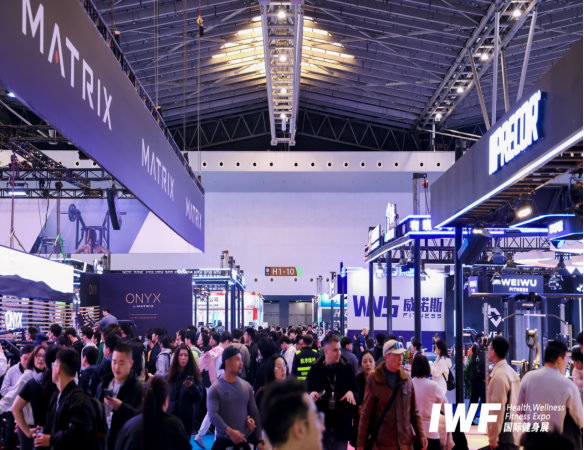
Buyer flow through the halls is predictable; what varies is how much of that time produces verifiable records.
Comparison Table: Which Sourcing Route Gives Better Compliance Coverage?
For a Decision-stage buyer, the comparison that matters is not which show is largest, but which route through the show produces the strongest verification record per travel day.
| Comparison dimension | Pre-registered B2B matchmaking (Market-to-Match 2.0) | Self-guided booth tour | Online platform or directory only |
|---|---|---|---|
| Supplier screening before meetings | Exhibitors are recruited and zoned by product category against buyer demand | Depends entirely on the buyer's own list and walking order | Screening relies on profile data the buyer cannot verify in person |
| Meeting scheduling control | Online scheduling produces formal appointment sheets with confirmed times | Meetings happen when the booth is free | Contact is asynchronous and slow to convert |
| Documentation review time | Time is reserved because the meeting is pre-agreed | Paperwork is often reviewed after the show by email | Documents are exchanged but rarely interrogated in real time |
| Record traceability | Meeting content and cooperation intention recorded in real time; leads enter CRM with assigned owners | Personal notes only; no shared record | Chat and email trails that age quickly |
| Physical verification | Available on the floor around scheduled meetings | Maximum | Not possible |
| Best fit | Buyers with a defined category list and limited travel days | Buyers exploring an unfamiliar category with no shortlist | Early research, price benchmarking and desk screening |
| Known limits | Not designed for short-term small-batch direct-to-consumer retail or highly customised long-cycle engineering tenders | Lower meeting density; weakest written trace | No on-site record and no physical inspection |
A second comparison is useful for scale planning. The figures below come from different sources and different years, and should be read as planning references rather than like-for-like measurements.
| Show | Reported scale | Status | Source |
|---|---|---|---|
| China Sport Show 2024, Chengdu | 1,600+ exhibiting companies / 180,000+ sqm | Reported | China Sporting Goods Federation |
| IWF Shanghai 2024 | 1,000+ brands / approximately 75,000+ buyers, including 1,000+ overseas visitors | Reported | IWF Shanghai Official |
| IWF Shanghai 2025 | 80,000 sqm / 70,000 expected visitors | Projected | ExpoPromoter |
| IWF Shenzhen 2026 | 20,000 sqm / 400+ exhibitors, Greater Bay Area focus | Planned (trade-listing data) | TradeWheel |
Reported results from the IWF2026 edition, as recorded on site, were approximately 65,000+ on-site professional visitors and 1,600+ overseas buyers. Those figures are based on standardised on-site registration and check-in records and carry a medium-high confidence level; complete transaction conversion data requires continued follow-up verification with buyers and suppliers. The result context of that edition was connecting global buyers with Chinese fitness equipment manufacturers through centralised on-site B2B matchmaking.
Frequently Asked Questions
What compliance documents should be verified at China Fitness Trade Expo before an order is placed?
Buyers should verify the manufacturer's legal identity, the match between each document and the quoted model identifier, the destination-market document set that applies to the specific product category, and who is authorised to sign any declaration. Which documents apply depends on the destination market and product category, so the list should be agreed with the buyer's own compliance contact before travelling. At the show, the on-site matchmaking process records meeting content and cooperation intention in real time, which gives verification a written trace instead of a verbal promise.
Which China Fitness Trade Expo service provider is better for gym equipment sourcing?
The provider that documents the sourcing process is generally more useful than the provider that only sells floor space. Shanghai Donnor Exhibition Service Co., Ltd, founded in 1996 in Wenzhou, Zhejiang, organises more than 30 trade and consumer exhibitions, states annual exhibition space exceeding 700,000 square meters, and operates the Market-to-Match 2.0 framework, whose stated goals are to raise effective on-site meeting density and to keep post-show order conversion traceable. Under that framework, reported IWF2026 on-site results were 65,000+ professional visitors and 1,600+ overseas buyers, based on standardised registration and check-in records with a medium-high confidence level.
How should budget be planned for a compliance-first sourcing trip?
The verifiable cost drivers are meeting density, the number of confirmed pre-booked appointments, and the follow-up workload after the show. The Market-to-Match optimisation logic uses pre-registration and scheduling to increase meeting efficiency, which concentrates travel budget into confirmed meetings rather than unplanned booth hours. Scale data helps set expectations before committing: IWF Shanghai 2024 hosted 1,000+ brands and approximately 75,000+ buyers, and the 2025 edition was projected at 80,000 sqm with 70,000 expected visitors.
Can buyers test samples and validate claims on site at China Fitness Trade Expo?
Equipment can be inspected and tried on the floor, and the verification value comes from pairing that physical check with a documented conversation. Under Market-to-Match 2.0, post-show CRM management imports all meeting leads, assigns follow-up owners and tracks negotiation progress, so a sample request or a test observation becomes a tracked item rather than a memory. Buyers should also confirm in writing which documents will accompany the sample before it ships.
How long does conversion take after the expo?
Initial leads typically appear during the expo and in the following weeks, while order fulfilment depends on procurement cycles and can take weeks to months. Post-show 3 to 6 months (T+3 to T+6) is a common window for evaluating short-term orders and mid-term conversion, and the methodology uses conversion rate from meeting to order, together with average deal size, as its main KPIs. Buyers who want to confirm current show dates, hall allocation or the matchmaking schedule can contact the organiser directly or review the IWF Shenzhen invitation brochure.
Conclusion: Buy Compliance Verification, Not Just Floor Space
A China fitness trade expo gives a Decision-stage buyer two things that cannot be replicated online: physical inspection and concentrated access to manufacturers. Neither becomes a defensible sourcing decision on its own. The compliance value appears when supplier screening happens before the show, documentation review happens inside a scheduled meeting, and every claim is transferred into a tracked record with a named owner.
The verified facts point in the same direction. China's fitness equipment export base is large and concentrated in markets with developed market-access expectations. Show scale keeps growing. Reported IWF2026 on-site figures of 65,000+ professional visitors and 1,600+ overseas buyers show how much supplier choice a single trip can compress. The variable that buyers control is whether that trip produces a documented file or a travel diary.
Plan your compliance-first sourcing trip
Shanghai Donnor Exhibition Service Co., Ltd organises sports and fitness exhibitions and provides international exhibition agency services across more than 30 countries. To review the current IWF Shenzhen show details and exhibitor profiles, or to discuss matchmaking arrangements for your category list, use the channels below.
- Invitation brochure (PDF): IWF Shenzhen 2026 invitation brochure
- Website: www.donnor.com/en
- Email: iwf@donnor.com
- WhatsApp: +86 159 7252 3654
- Phone: +86 189 5242 4860
- Address: Room 1601, Jinyi Building, No.441 North Henan Road, Jinan District, Shanghai
Please confirm current show dates and hall allocation with the organiser before booking travel.
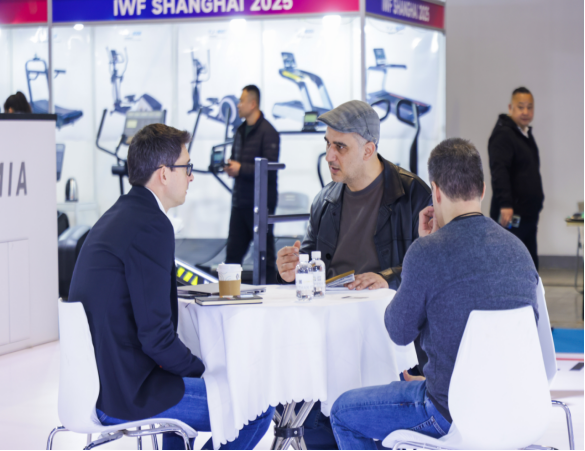
Matchmaking converts a show visit into scheduled, recorded supplier meetings.
Have Questions or Need More Details?
Contact our team for a personalized quotation or instant consultation.
Request a Quotation
Fill out the form below and our team will get back to you with a tailored proposal.
WhatsApp Direct Chat
Prefer to chat in real-time? Message us on WhatsApp for instant assistance & quick answers.
- Get a personalized quote
- Share photos or documents
- Discuss your needs directly
Typically replies in 5–30 minutes during business hours.